~50%
The new offering gave sales a stronger selling point for Kargo’s financial service.Acquisition uplift
Kargo wanted to expand its financing service, so we explored transporters’ financial needs through a series of research projects. The result was a new business vertical and a dedicated delivery-order-based financing module within Kargo’s transportation management system.
Some numbers, data, and statements have been altered to respect confidentiality agreements.
How might we help transporters address lingering cash-flow problems in the logistics industry?
Long payment terms put pressure on transporters’ cash flow and limited their ability to grow. We combined foundational research, a financing pilot, and service design to bring delivery-order financing into Kargo’s TMS—helping vendors request faster disbursement and track their transactions in one place.
Acquisition uplift
Faster agreements
First-month adoption
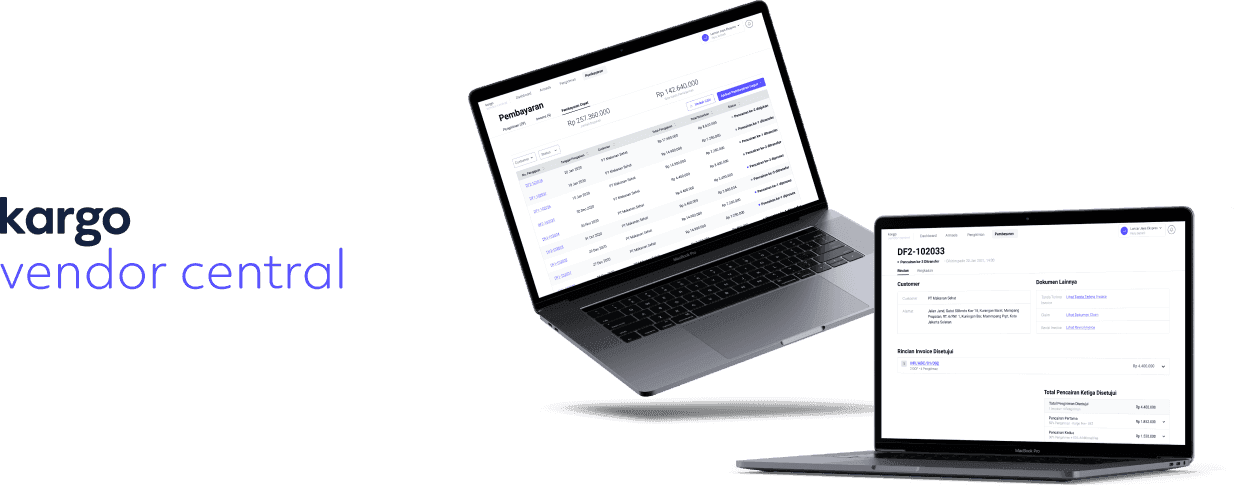
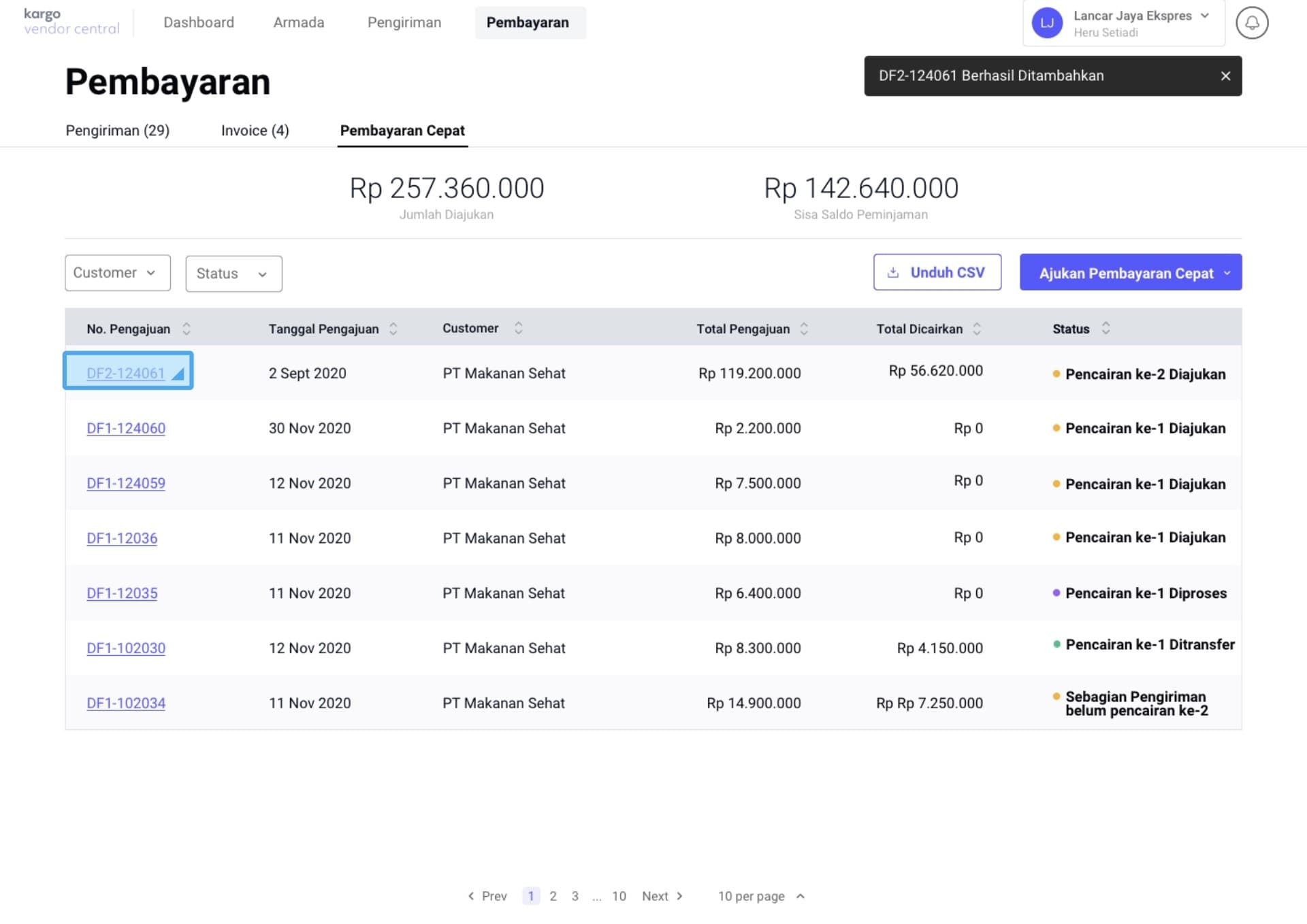
After a two- to three-month pilot, Kargo launched its first delivery-order-based financing service. Customers could now see the shipments they had submitted for financing directly in the TMS platform.
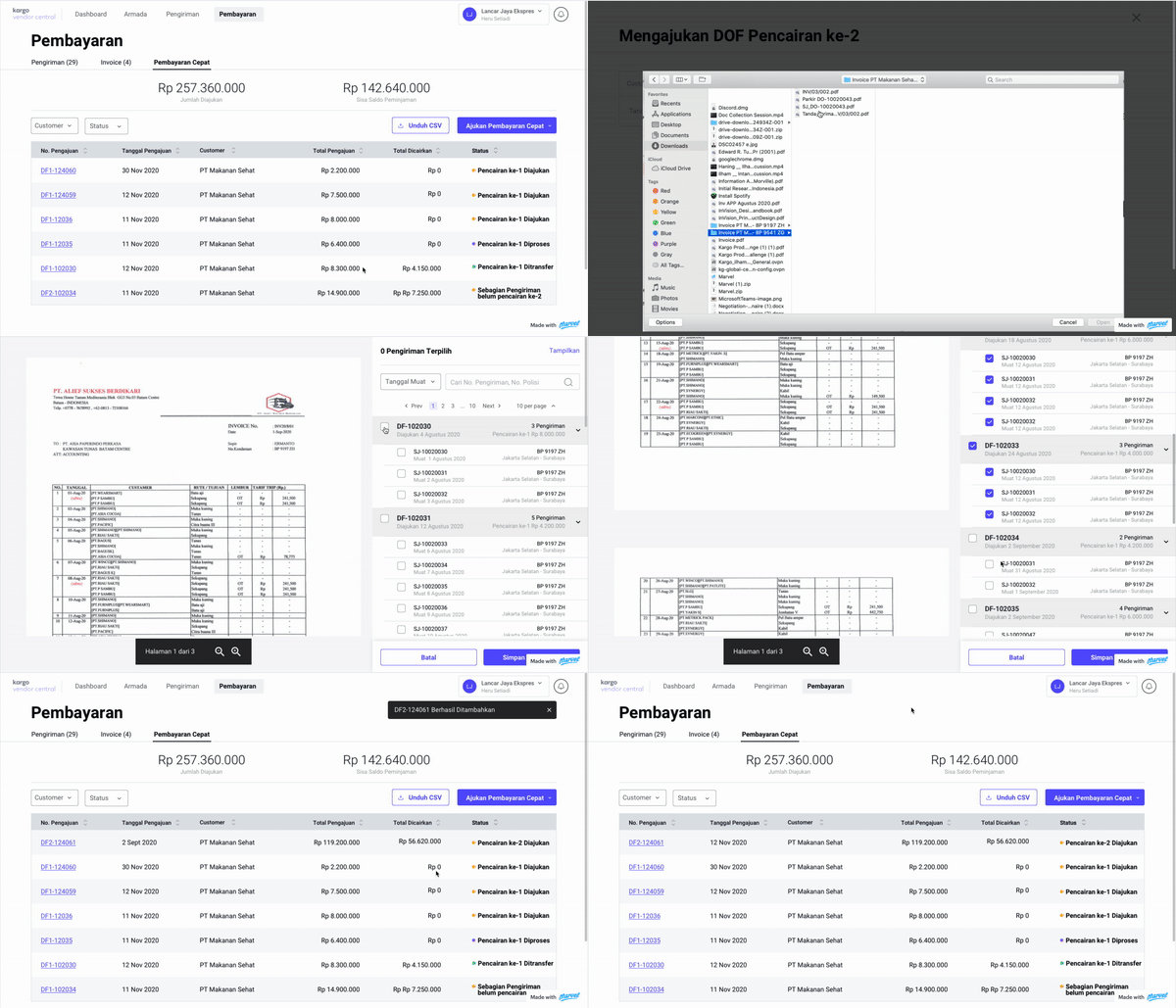
Vendors no longer had to ask Kargo through WhatsApp for every disbursement status or transaction detail. They could also see their historical transactions in a centralized platform.
CSV downloads made it easier to create their own reports.
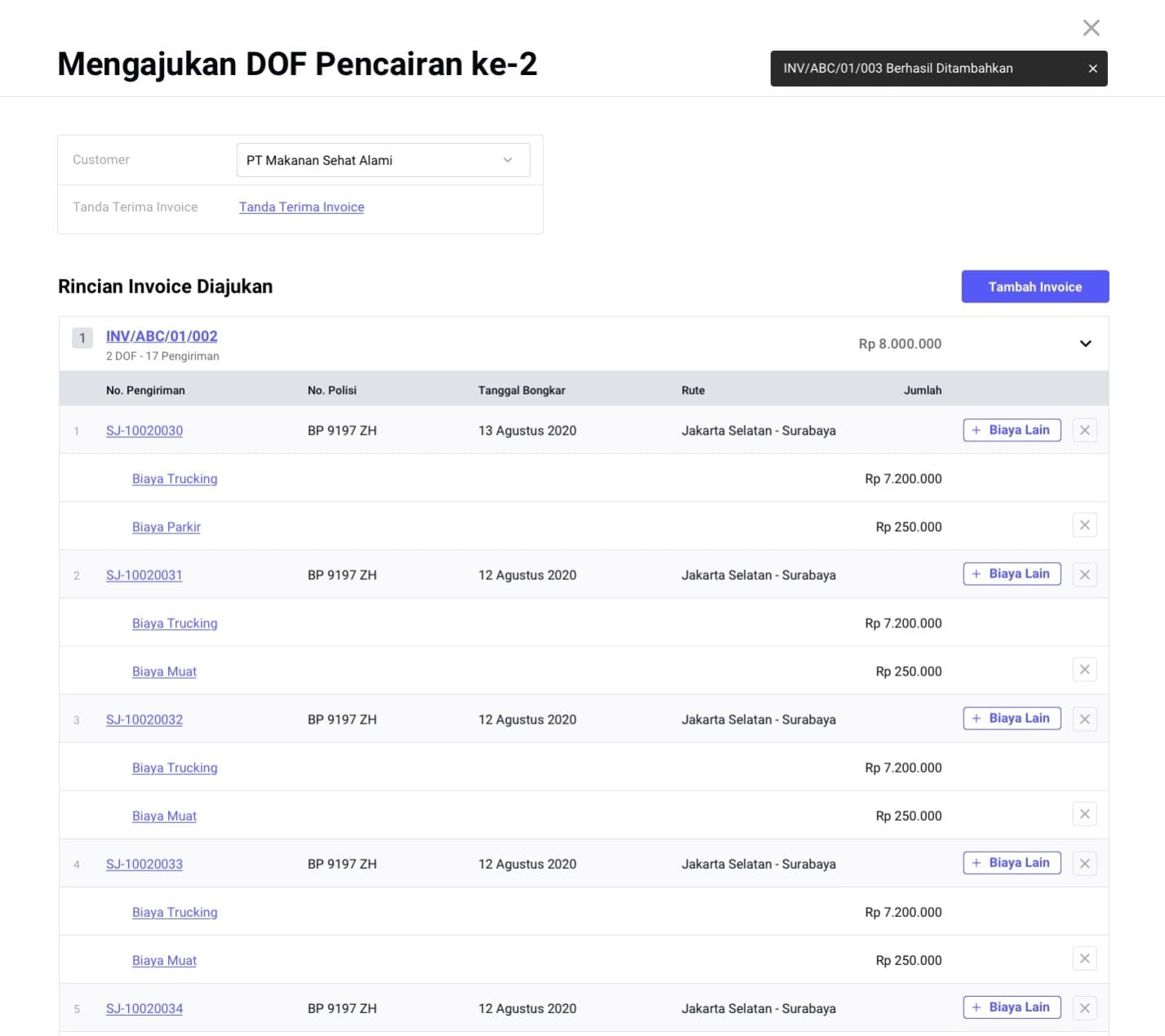
Vendors no longer needed to resubmit delivery orders and invoice documents to request faster disbursement.
They could choose shipments and invoices already in the platform, directly connecting their shipment data to the financing service.
Payment terms are common in logistics and can extend to 90 days after a service is delivered. Alongside day-to-day operational inefficiencies, these delays are a major constraint on transporters’ business growth.
Kargo already offered a quick-payment brokerage service, but it was available only to eligible transporters in its marketplace. To reach a broader audience, we had been experimenting with a non-exclusive invoice-based financing service, called PODF, and had seen encouraging market signals.
As we planned a product for PODF, the launch team identified an opportunity to provide financing even earlier, based on delivery orders: DOF. Before jumping into a solution, we treated this as a hypothesis and explored the problem space.
How might we help transporters address lingering cash-flow problems in the logistics industry?
We ran two rounds of research. The first built a foundational understanding of the environment; the second answered the primary research questions and helped identify opportunities.
A questions-and-assumptions workshop produced the action items for preliminary research, which then informed our primary research plan.
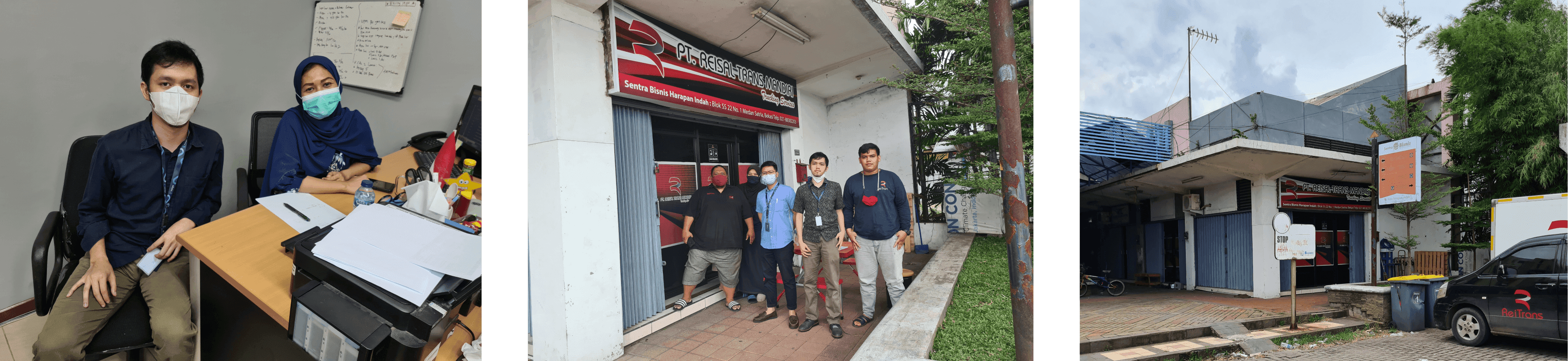
The research surfaced insights into transporter growth, cost structures, and cash-in versus cash-out patterns. The detailed findings remain confidential under NDA.
We used these insights to explore potential business lines and approaches to transporter acquisition and retention.
After two weeks of synthesis and presentations, I facilitated a brainstorming workshop to align the team on next steps and turn high-level ideas into action items.
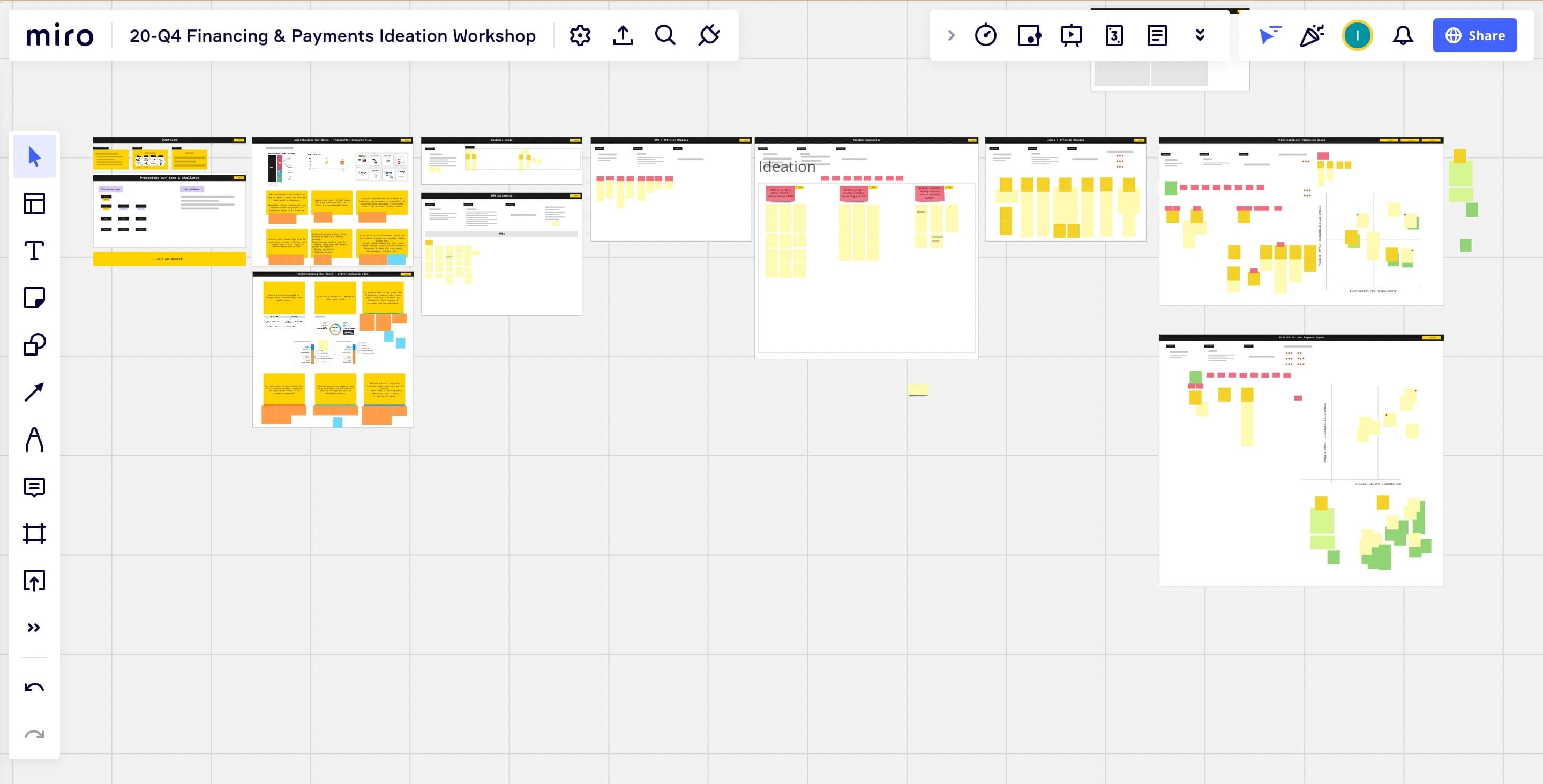
The workshop produced several action items. We chose to prioritize DOF first and experiment with other hypotheses later, assigning a timeframe and a person in charge to each action. Our question became more focused.
How might we help any transporter get money faster for their shipments through an interaction similar to PODF?
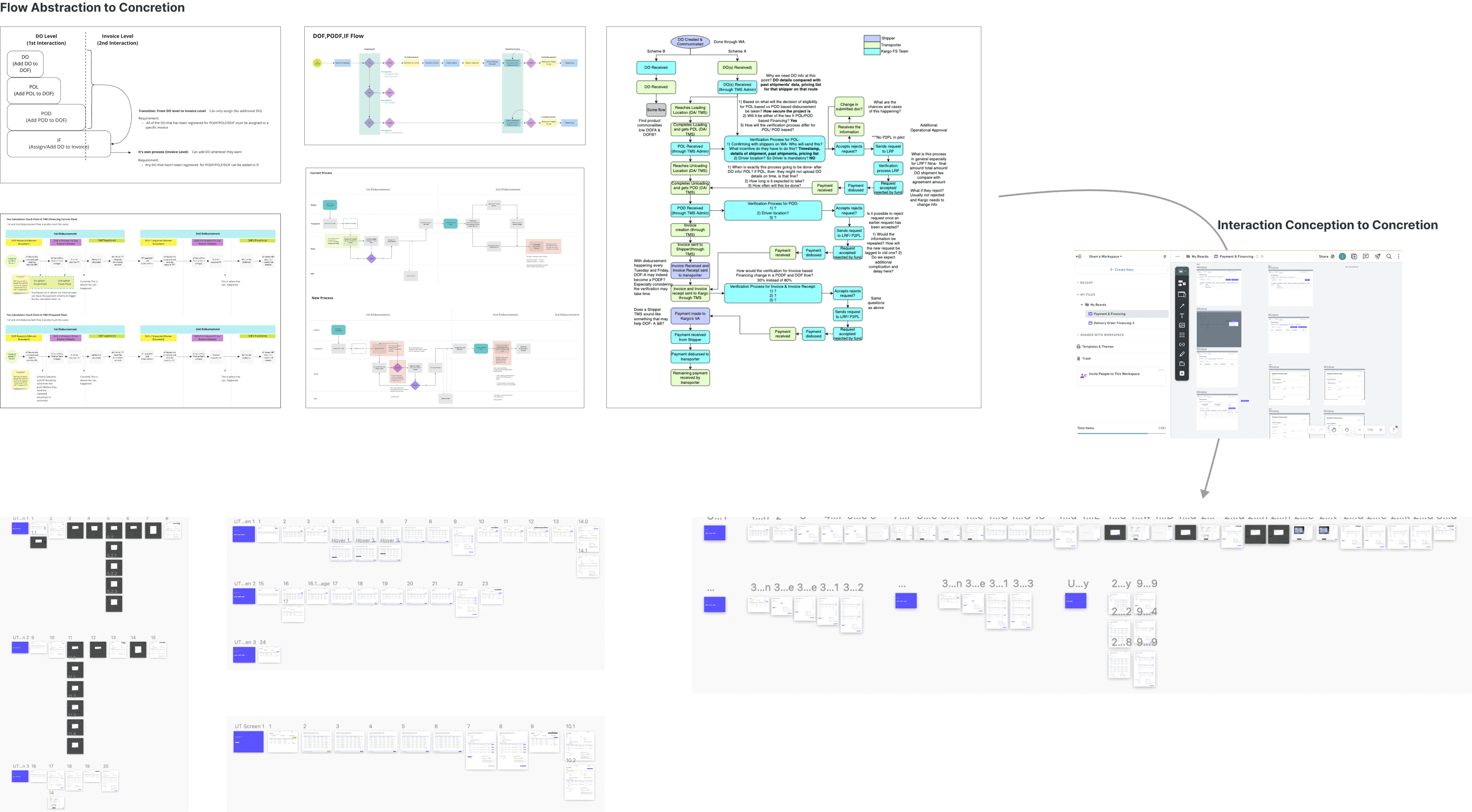
Together, we mapped the future service experience, including ideal onboarding and every touchpoint that would shape the product. We began with the end in mind and worked backwards.
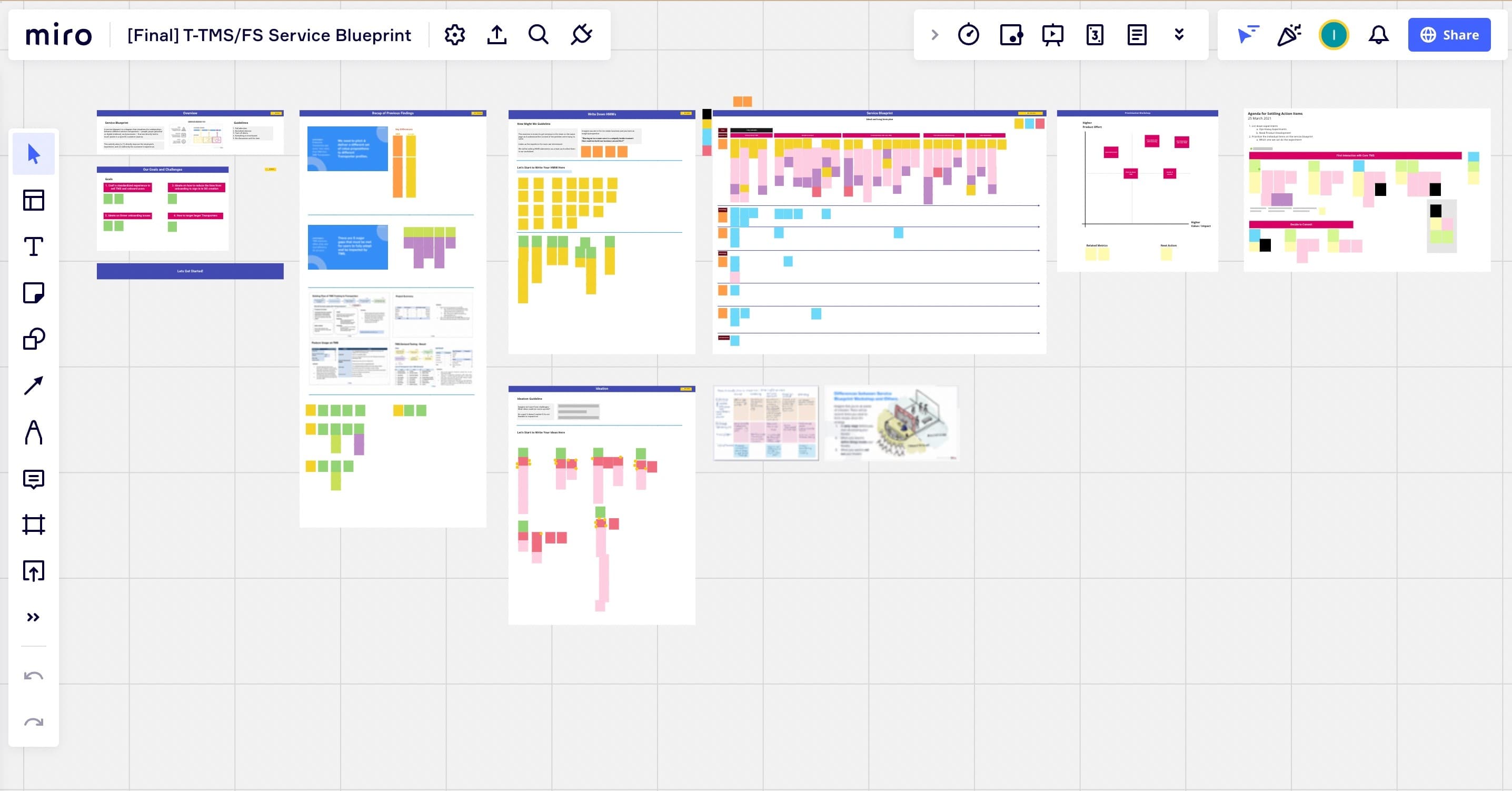
We then aligned the design with the pilot, which had been running in parallel for a month. Early feedback from transporters helped guide the next round of ideation.
Detailed flows are confidential.