Generate an initial storefront in a few minutes. All self-serve.
Publishers can move from initial setup to a working storefront without relying on Coda teams to manually configure each store.
How we combined a reusable Commerce Engine with AI-assisted setup to reduce store creation from roughly two days to a few minutes.
Some numbers, data, and statements have been altered to respect confidentiality agreements.
How might we turn a store-creation process that takes days into a self-serve experience that gets publishers to a working webstore in minutes?
From Manual Publisher Operations to Ai-assisted Store Generation
2023 — Understanding the broader journey When I joined Coda, the broader publisher journey was highly manual and could take more than 90 days. 2024 — Validating D2C and accelerating store creation By the end of 2024, we had validated the direct-to-consumer (D2C) model and reduced one part of that journey—internal store creation—to roughly two days. 2025 — Moving from an internal tool to publisher self-service The next challenge was to remove the operational knowledge and repetitive setup still standing between each publisher and a working storefront. We responded by combining a reusable Commerce Engine with an AI-assisted Store Builder, enabling publishers to generate a working storefront themselves in minutes.
Publishers can move from initial setup to a working storefront without relying on Coda teams to manually configure each store.
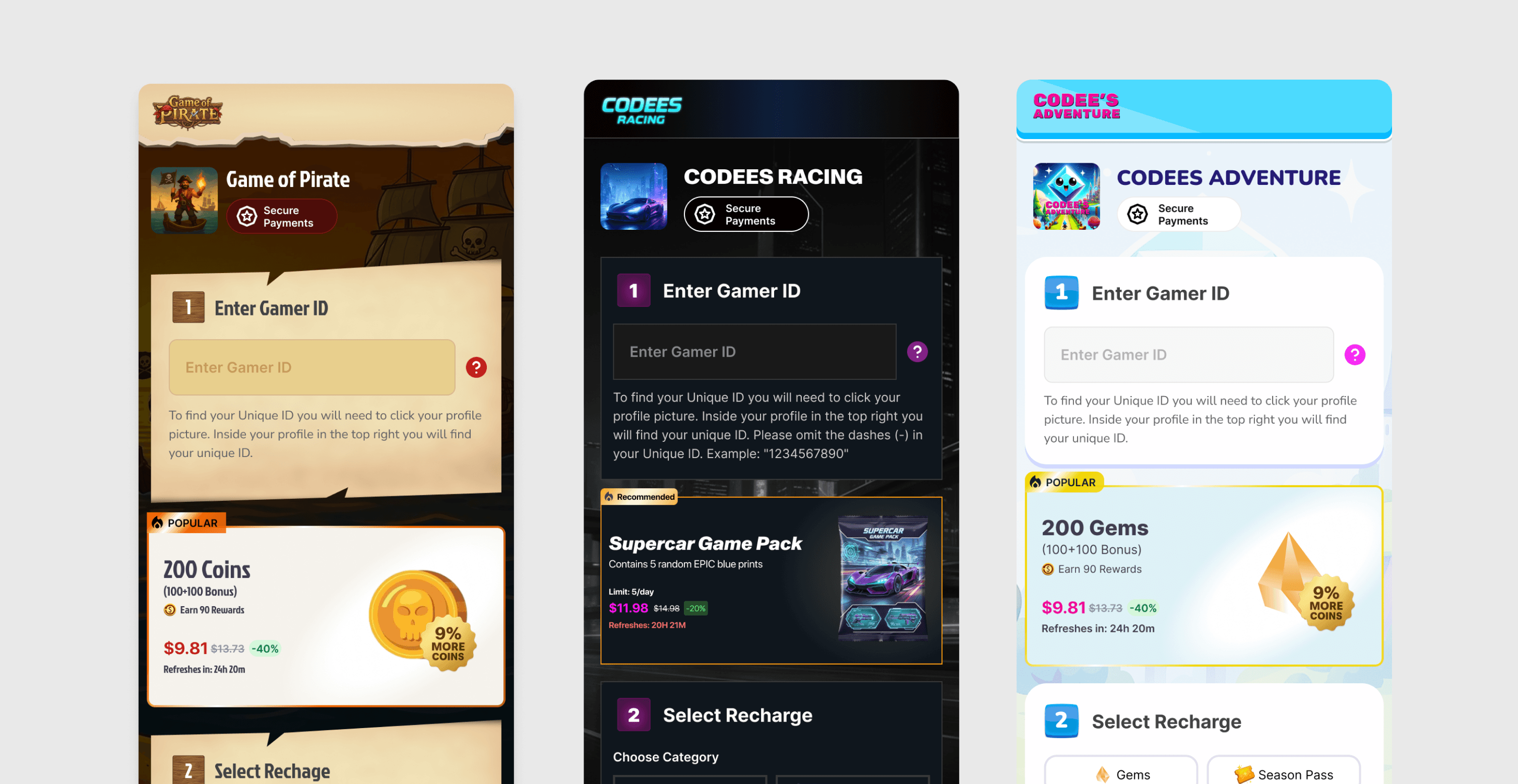
Shared commerce capabilities, integrations, and LiveOps can be built once and reused across current and future stores.
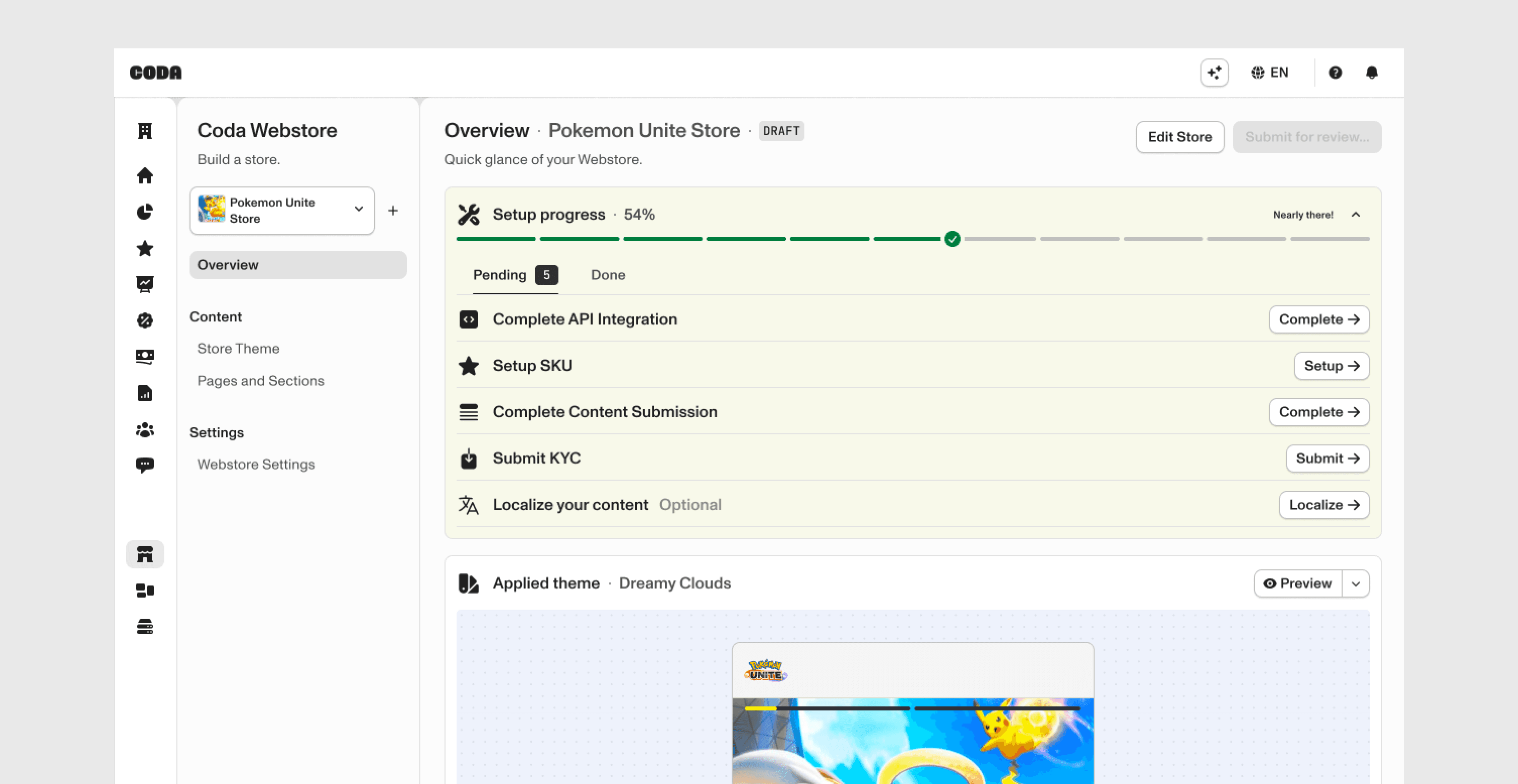
Prebuilt commerce and LiveOps modules reduce how much publishers need to configure manually before launch.
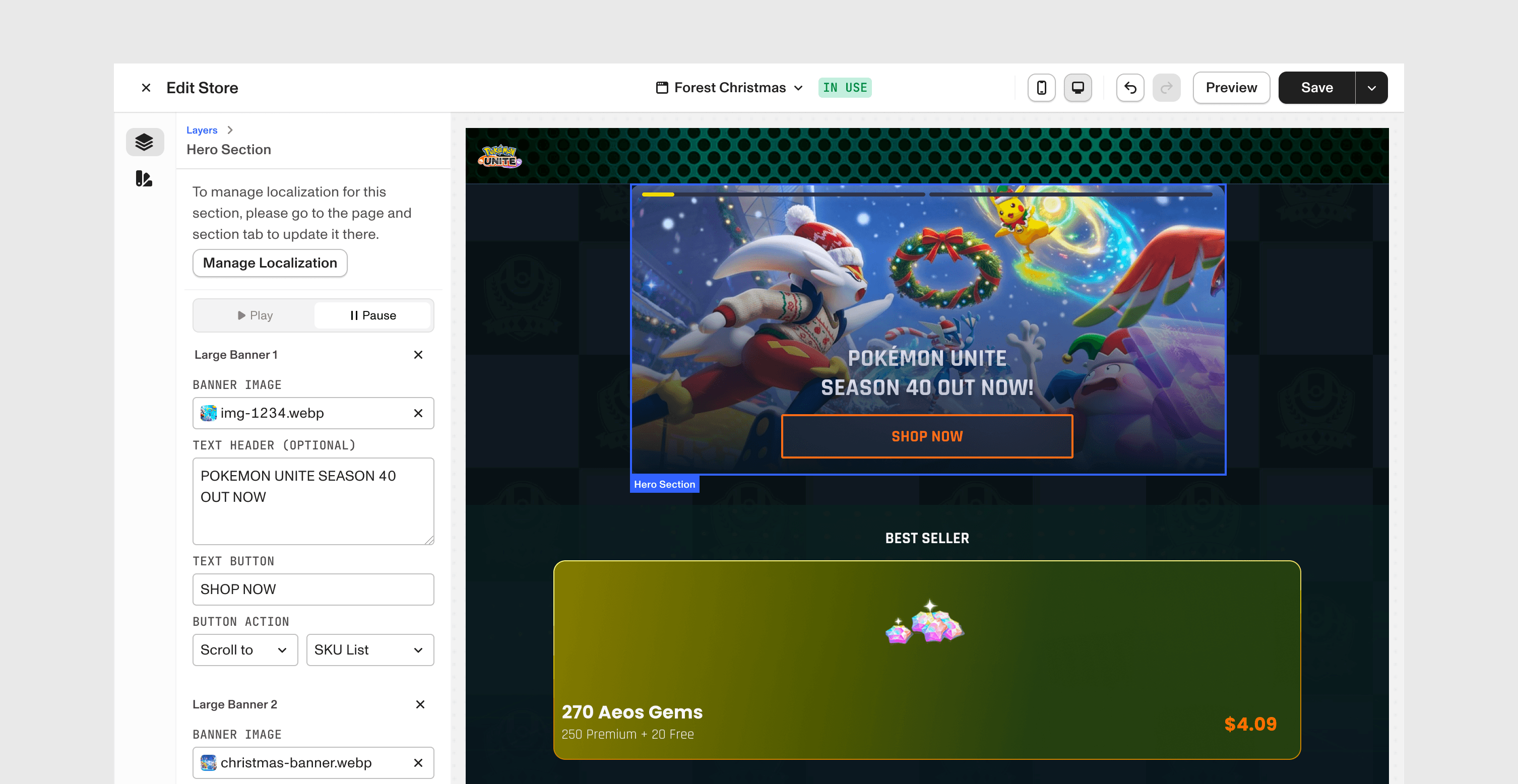
What comes next: once store generation was reduced to minutes, the next challenge became creative control. In early 2026, we began exploring a WYSIWYG editor and store design system that would let publishers customize their storefront visually without breaking the shared commerce foundation.
Faster initial store creation
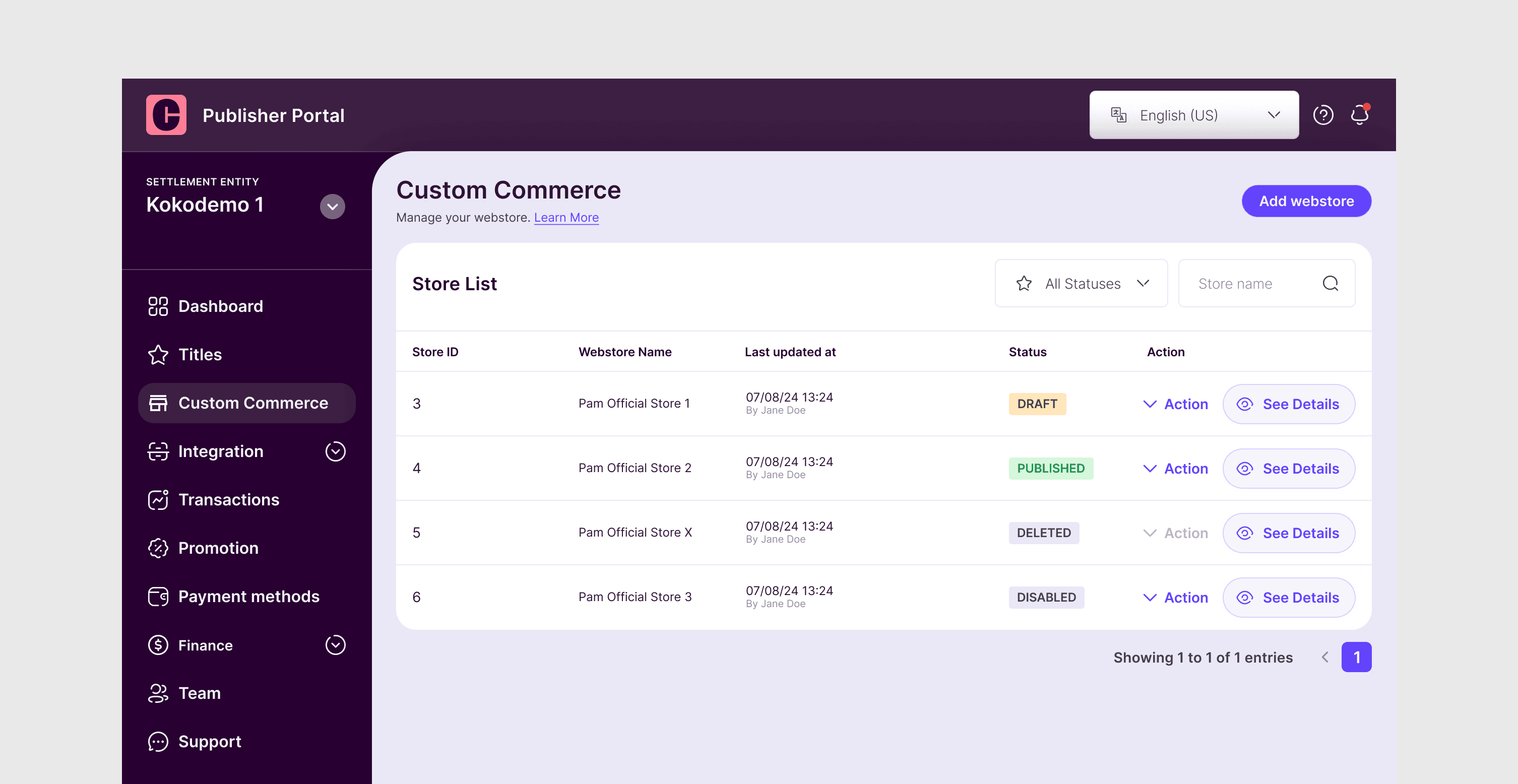
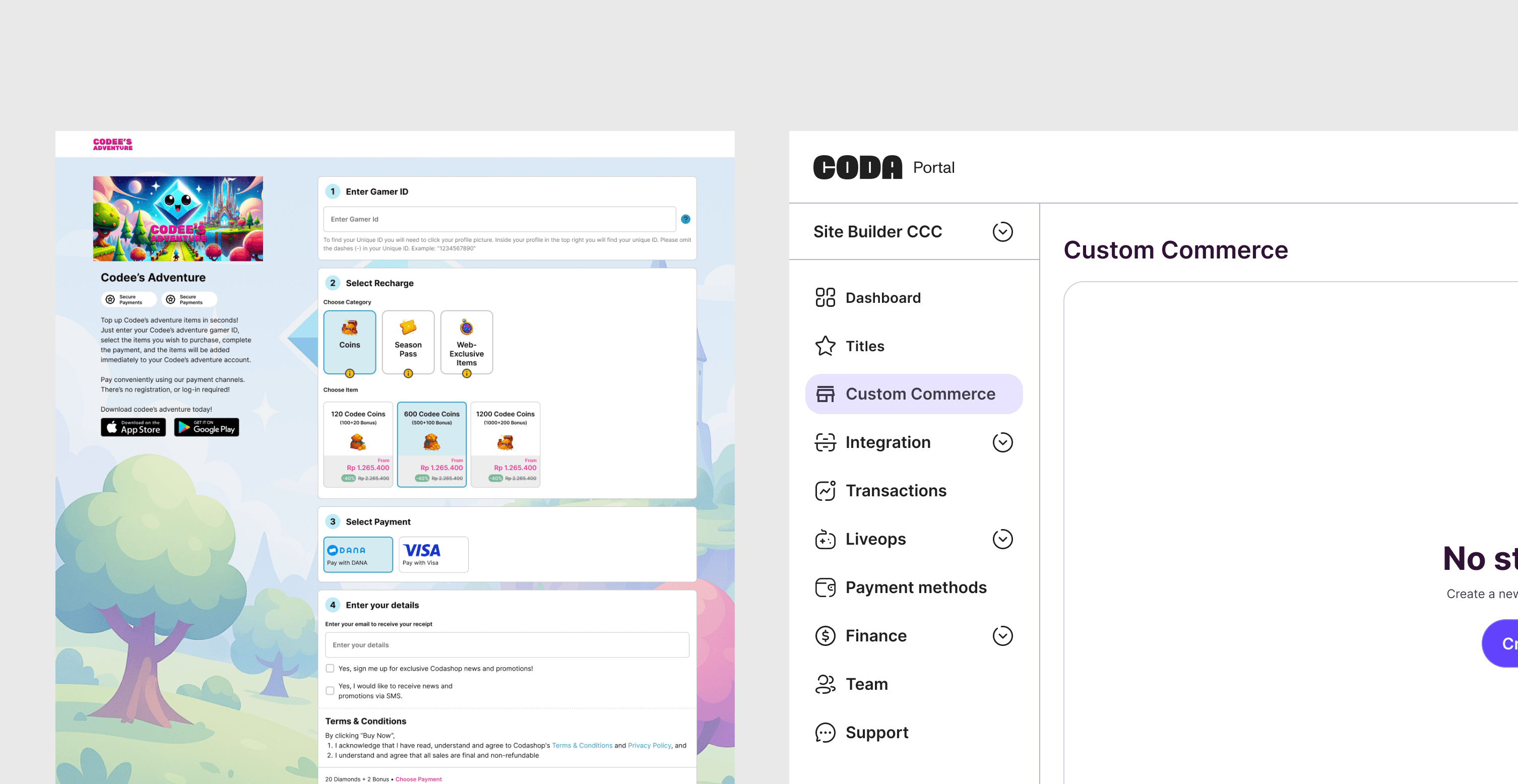
When I joined Coda in 2023, Publisher Portal was mostly an internal tool for settlement reporting.
Over the next two years, it evolved alongside the business: we streamlined the publisher journey, launched our first highly customized D2C webstores in 2024, and validated the model with flagship stores generating multi-million-dollar revenue. By the end of 2024, a basic internal store builder had reduced initial store creation to roughly two days.
We had validated the business and accelerated internal store creation. The next challenge was scaling without treating every new store as another bespoke project.
Earlier, we had accepted these limitations while validating the business.
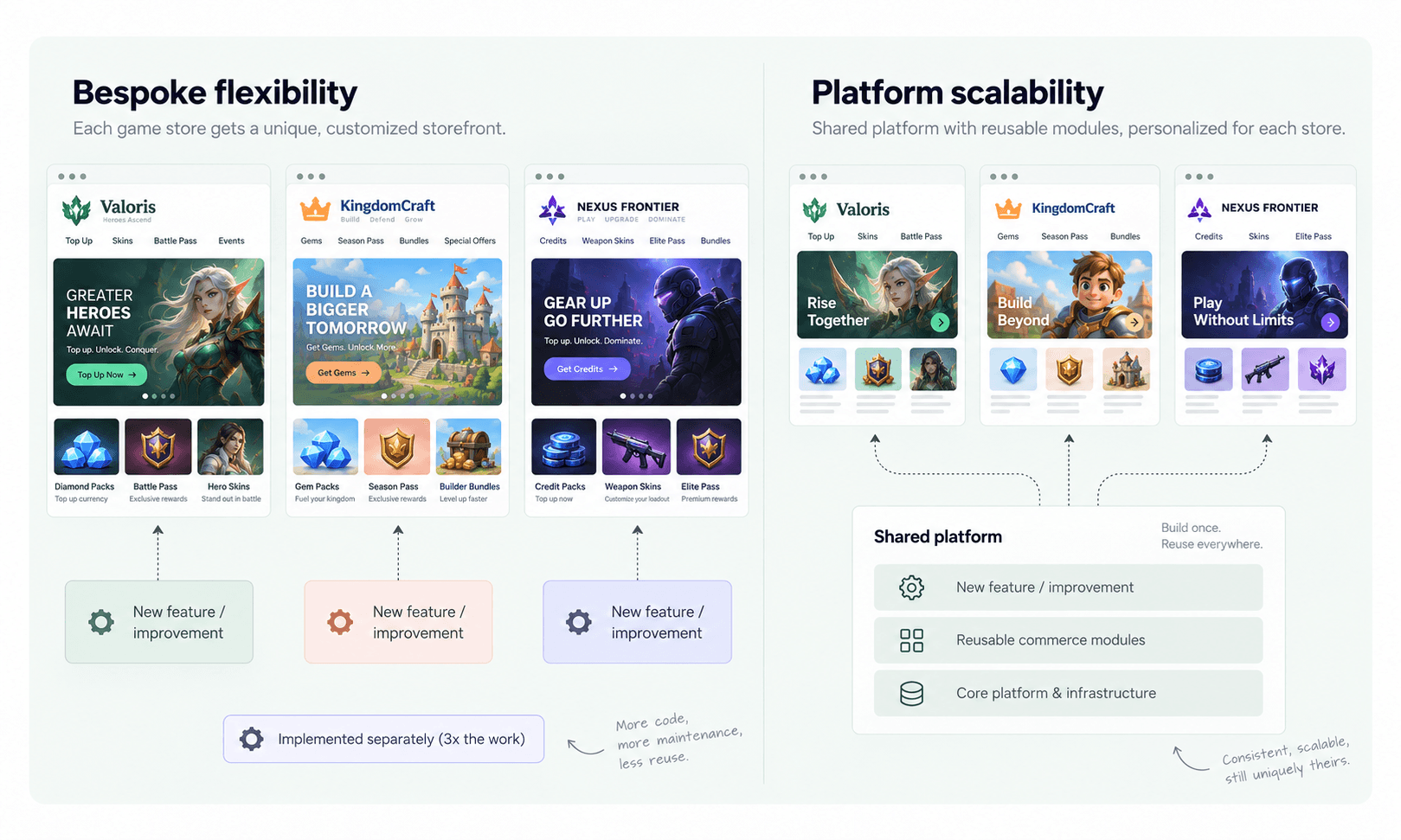
Our early webstores followed two approaches. Custom commerce supported games such as CODM and FCM through highly tailored storefronts, while instant commerce offered a more standardized experience on separate infrastructure.
This helped us meet different publisher needs, but left us with stores built in different ways. Many interface elements weren’t reusable, and some stores even used different framework versions, including Vue 2 and Vue 3.
A routine campaign update—highlighting a product, applying a seasonal theme, or changing a product-card layout—could require separate implementation work across stores.
We could customize individual stores, but we couldn’t easily carry those improvements across the platform.
Our initial focus was making each publisher’s store work for their specific needs. As the platform grew, the question expanded: how could we continue supporting that variety without each new store adding the same implementation and maintenance effort?
Old frame: How do we build a store that meets this publisher’s needs?
New frame: How do we support different publisher needs through a platform that scales?
Customization remained important. What changed was how we intended to support it: a shared Commerce Engine underneath different storefront experiences.
The flexibility publishers valued was difficult to scale with the way our stores had evolved.
Commerce Engine gave us a shared foundation. The next challenge was making store creation usable by publishers without the operational knowledge Coda’s teams relied on.
Our first instinct was to improve the existing sequence: create a title, add products, configure the store, then preview the result.
But this meant publishers had to complete the setup before seeing their own storefront. We began questioning which steps were necessary upfront and which could happen after publishers had something tangible to work with.
To explore which steps could move later, we reviewed the existing flow, observed how Ops handled setup, and examined how other products introduced users to their first result.
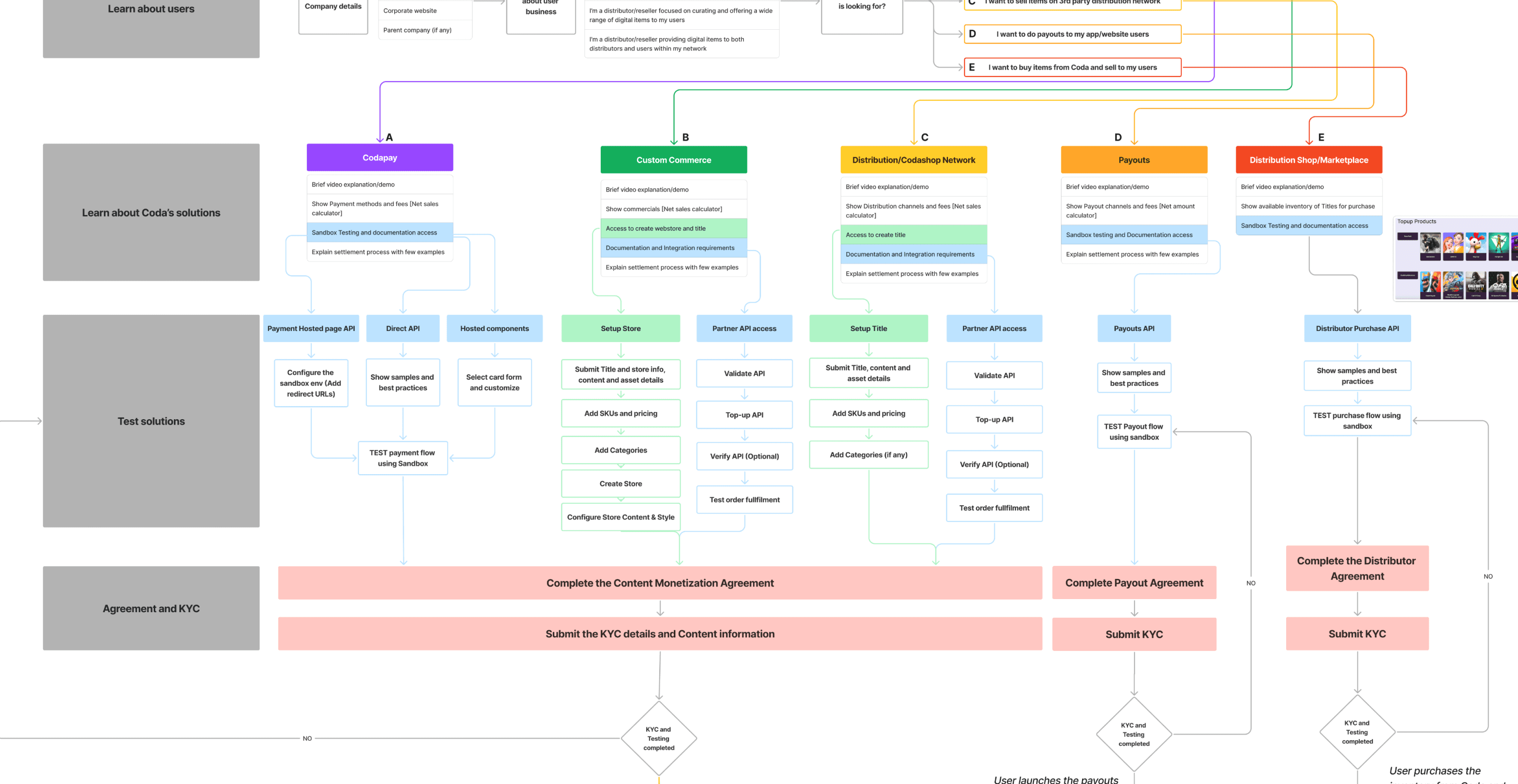
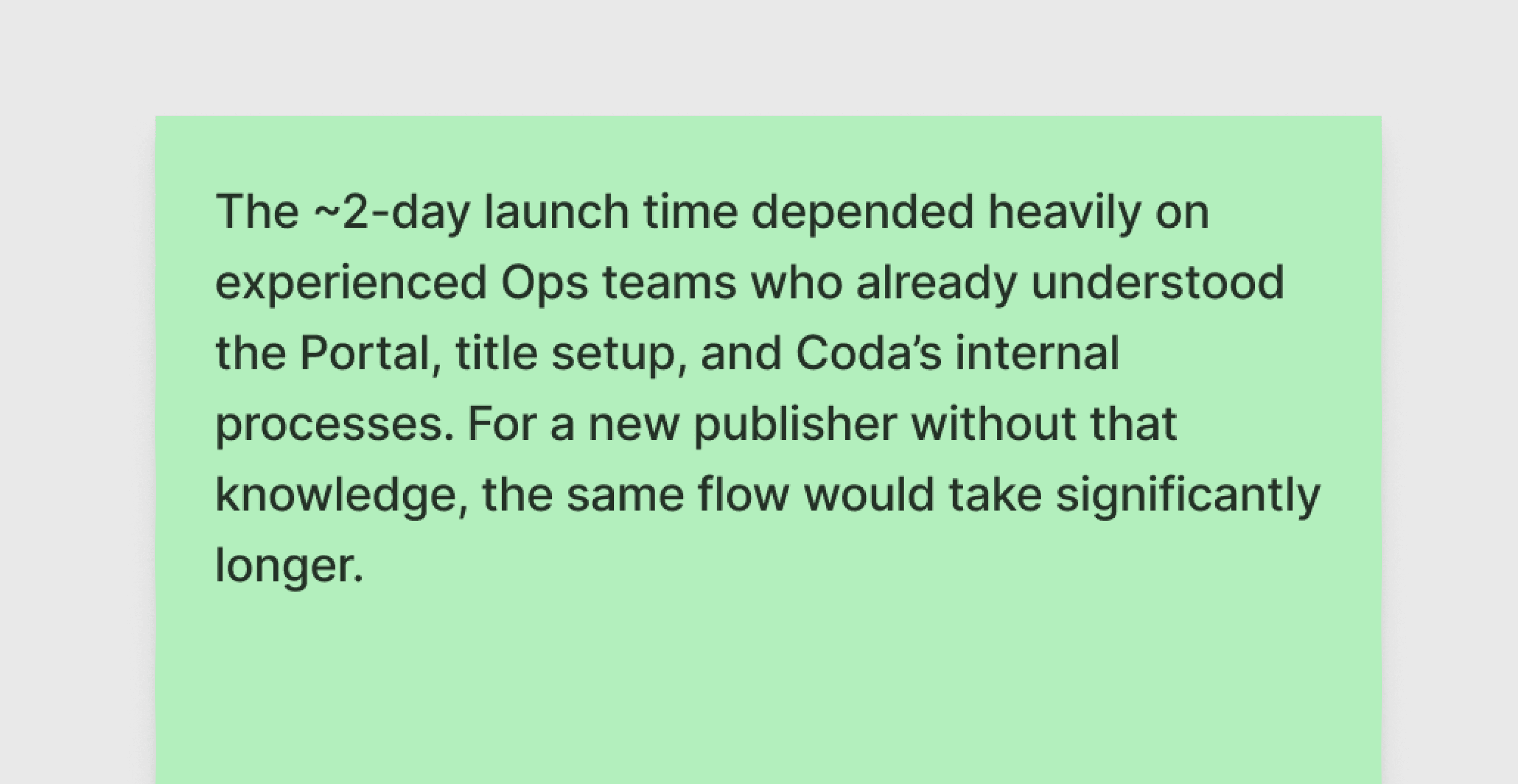
These observations led us to explore a different sequence: show publishers an initial storefront, then guide them through the remaining configuration.
How might we get publishers to a working store as early as possible?
I developed three contrasting directions to examine where publishers should first experience value, how much setup they should complete upfront, and how store creation would connect to ongoing management. Each direction represented a hypothesis to investigate.
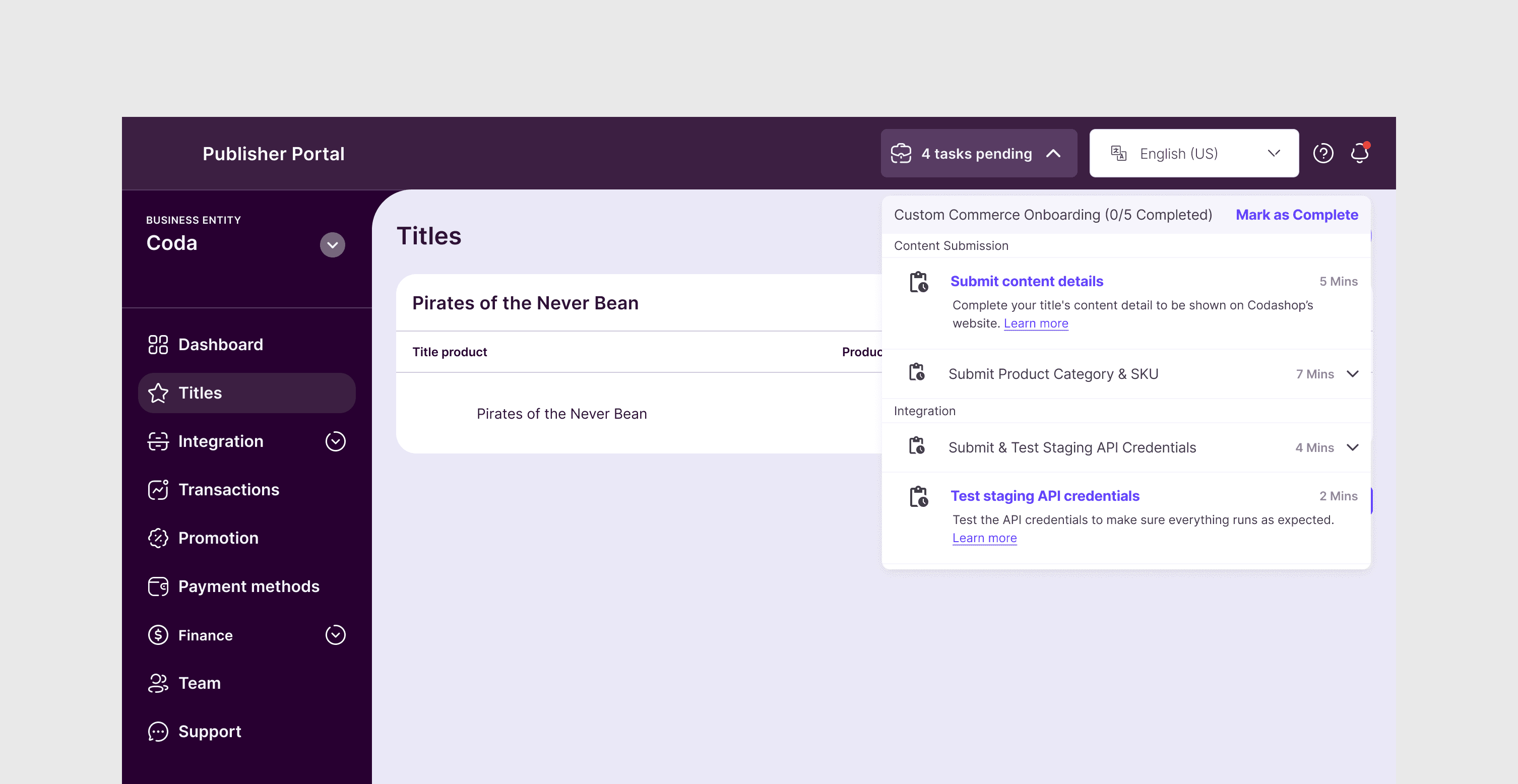
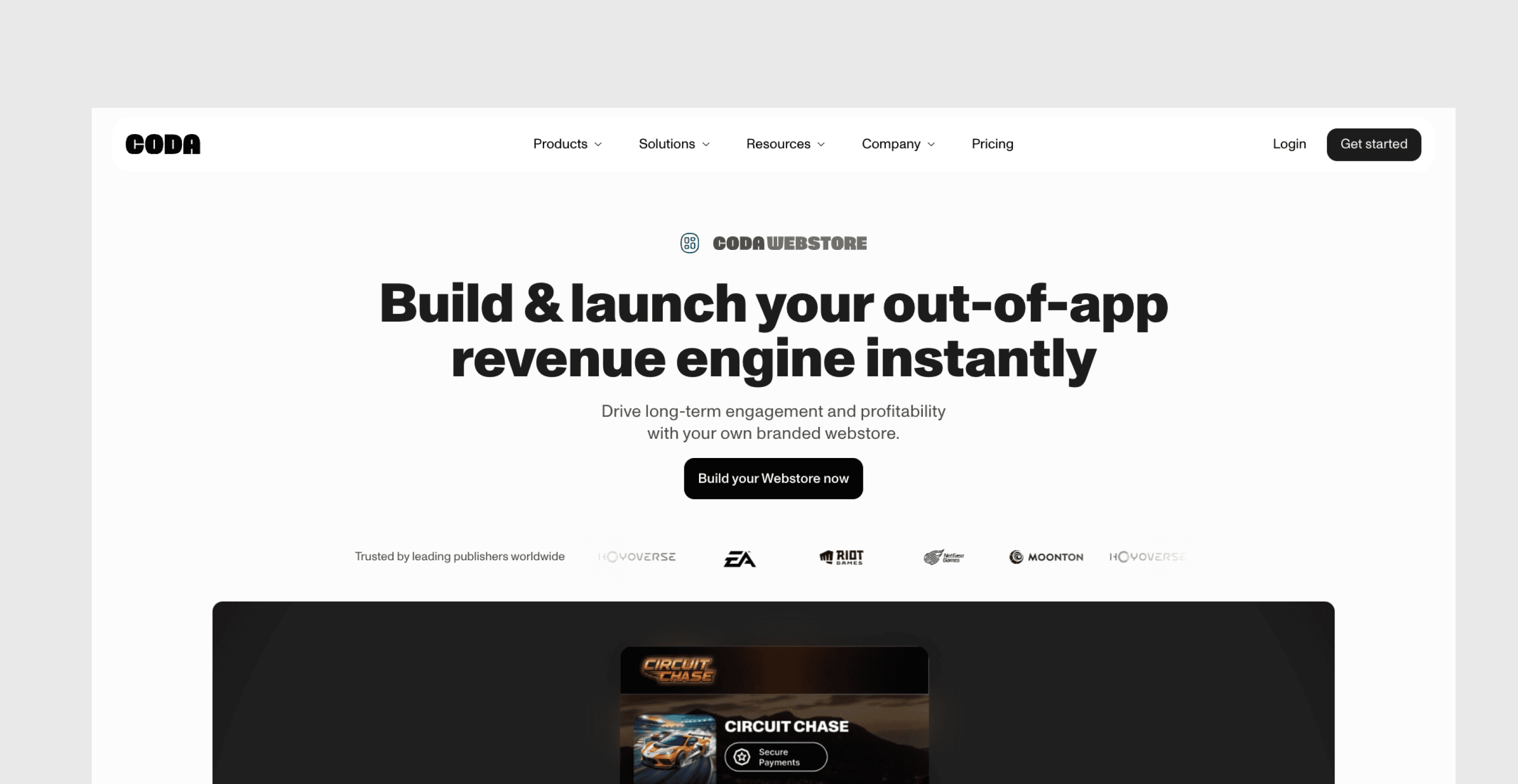
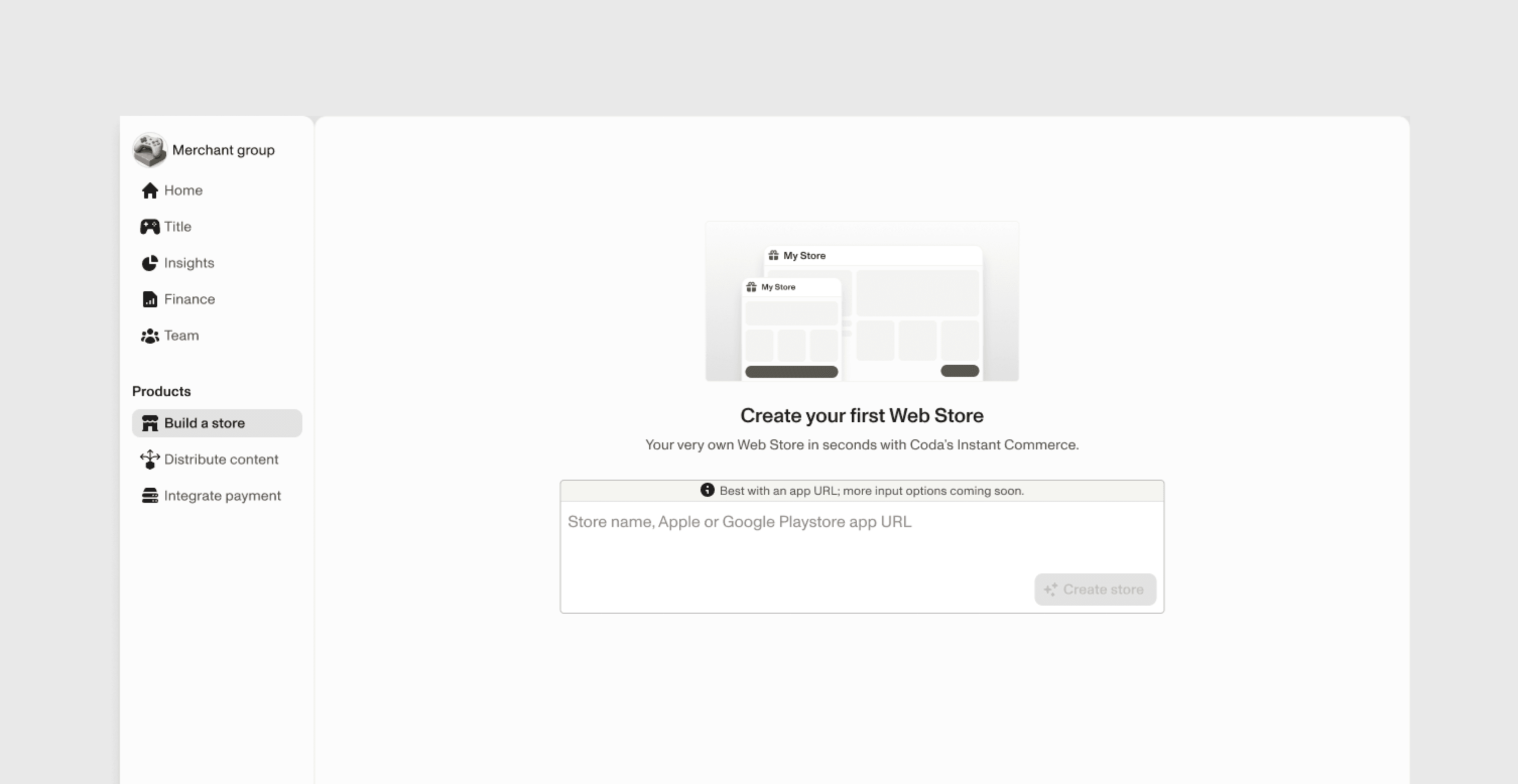
Direct access to publishers took longer than our timeline allowed. To get early feedback, we asked Business Development (BD) and Operations (Ops) colleagues to walk through the concepts as if they were creating a storefront for their company.
Participants already understood Coda’s terminology and processes, so their familiarity could hide difficulties a publisher might encounter. Taking on a publisher’s task did not remove that limitation.
We also considered patterns from previous publisher interactions. These provided context for interpreting the feedback, while the internal walkthroughs helped us identify potential issues in the proposed experience.
We used these inputs to refine the concepts and form working hypotheses for later publisher validation.
We still needed to test whether publishers unfamiliar with Coda could complete the flow independently, understand the generated result, and move confidently into the remaining setup.
We chose Option 3: AI-assisted creation inside Publisher Portal. The Portal was already where publishers would manage their stores, so keeping creation there connected the generated storefront to its ongoing setup and management. This also avoided introducing a separate website-to-Portal handoff.
The tradeoff was that publishers needed to enter the Portal before seeing a generated store. We accepted that constraint for the initial release, while leaving generation before Portal onboarding as a direction to explore.
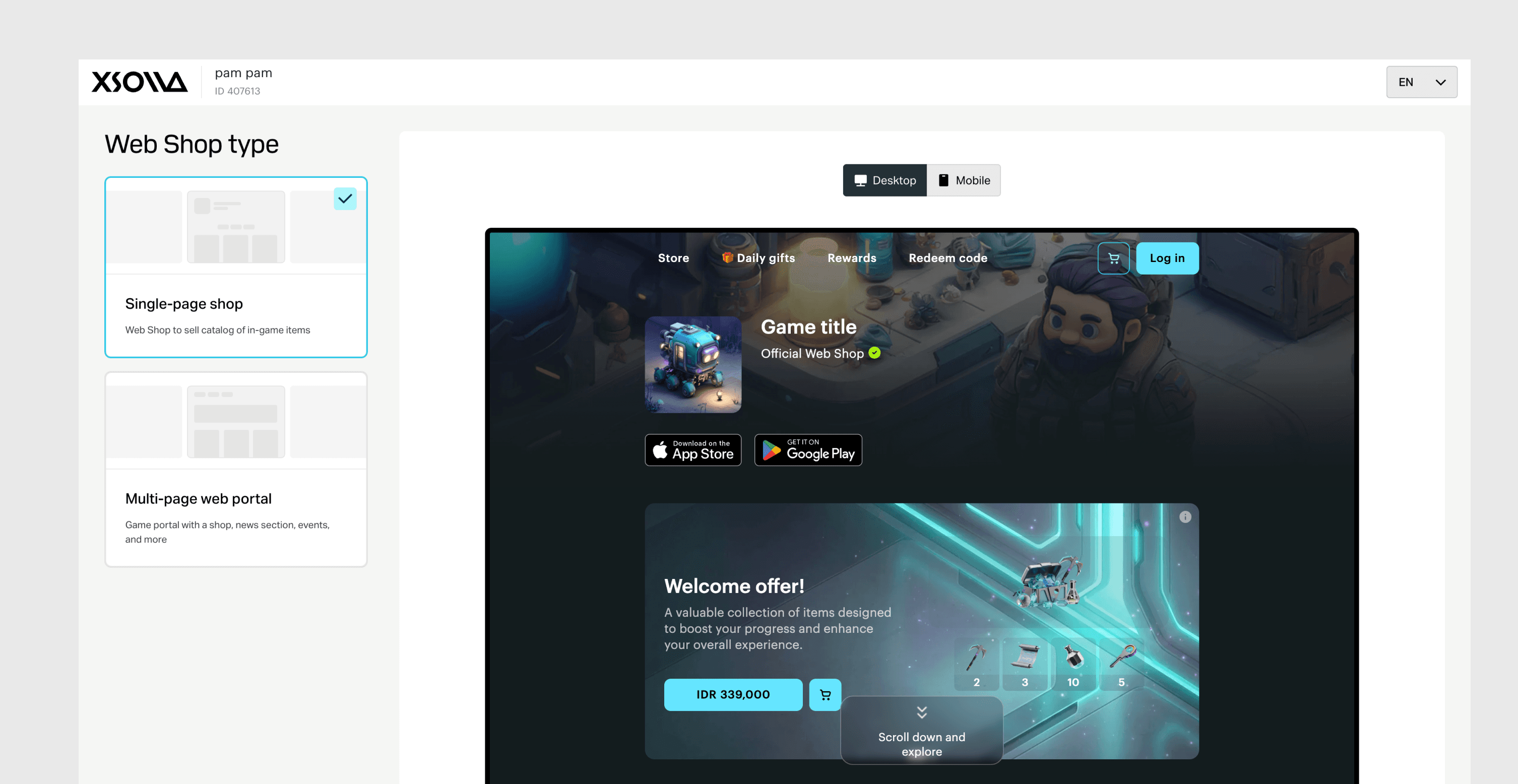
The shipped Store Builder used a publisher-provided Google Play, App Store, or Steam listing URL to generate initial store content, reducing the amount they needed to configure from scratch.
~2 days → a few minutes
Compared internally with the required inputs ready; excludes KYC, approvals, and other launch requirements.
WYSIWYG wasn’t the wrong idea. The sequencing was.
Custom implementations helped us meet publisher needs while validating D2C. Looking back, I wouldn’t treat that early approach as a mistake. The lesson was recognizing when a useful compromise had become a constraint—and when shared capabilities deserved greater investment.
We focused on getting publishers to an initial storefront quickly, but visual customization remained limited. This taught me to distinguish reaching the first result from having enough control to make that result useful. It shaped how I approached the next phase of the visual builder and design system.
Working with BD and Ops helped us evaluate concepts when publisher access was limited. But their knowledge of Coda could also make unfamiliar steps appear straightforward. I learned to separate what those sessions could reveal from assumptions that still needed direct publisher testing.
In 2026, the visual store builder and supporting design system entered soft launch, extending the work toward greater publisher control over storefront appearance.
With initial store generation accelerated, the next question was how much creative control publishers needed—and how to provide it consistently across stores.