~60%
Reported improvement in disbursement speed after the redesign.Faster disbursement
In late 2020 Kargo set out to reinvent its platform. The existing system had run into scalability limits, and enough problems had piled up that expanding into a new vertical would have broken it.
Some numbers, data, and statements have been altered to respect confidentiality agreements.
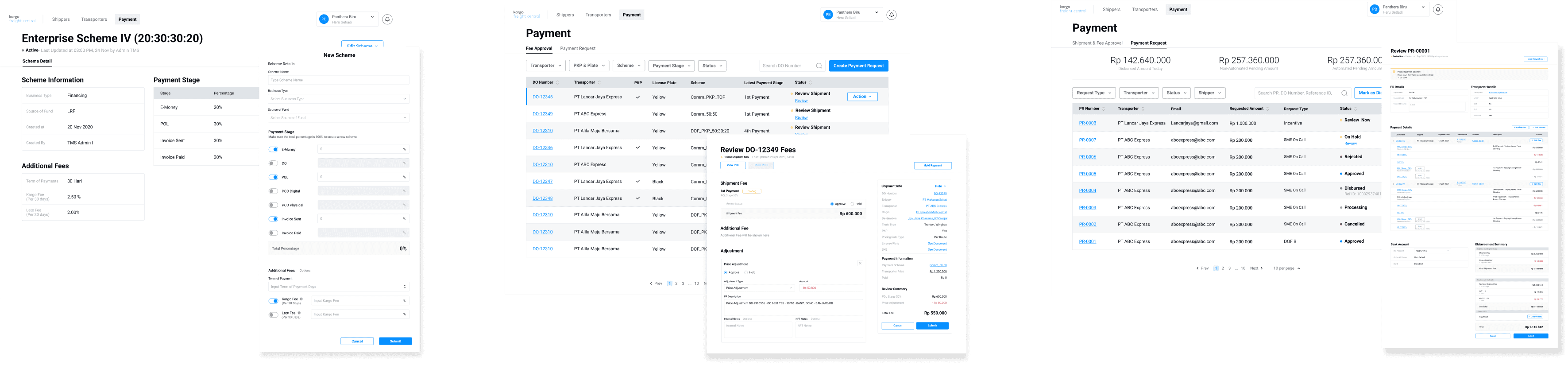
How might we create a robust payment system that is accurate, fast, reliable, integrated, and scalable?
Rather than patch the payment dashboard again, we rebuilt the platform so that every module could be reworked. I owned the payment module inside the payment platform squad — specifically the disbursement system, the foundational module the rest of it would sit on.
Faster disbursement
Fewer rejected payments
Disbursement in-platform
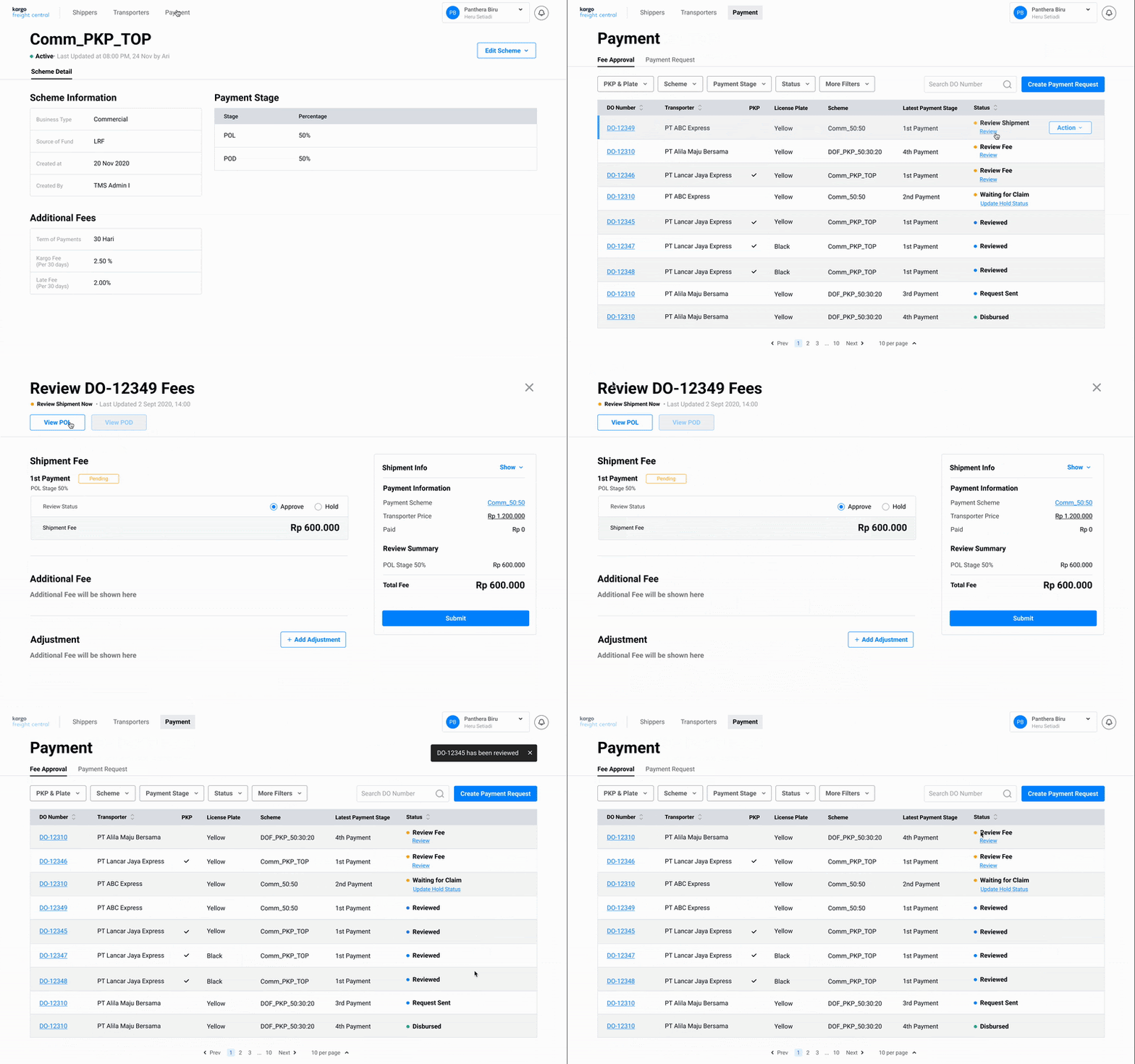
The new information architecture and infrastructure were rebuilt so the system works around the user. Data is reachable in one click instead of a dozen tabs, tax variables are embedded in the payment scheme, and redundant pages were replaced with access limits and status combinations.
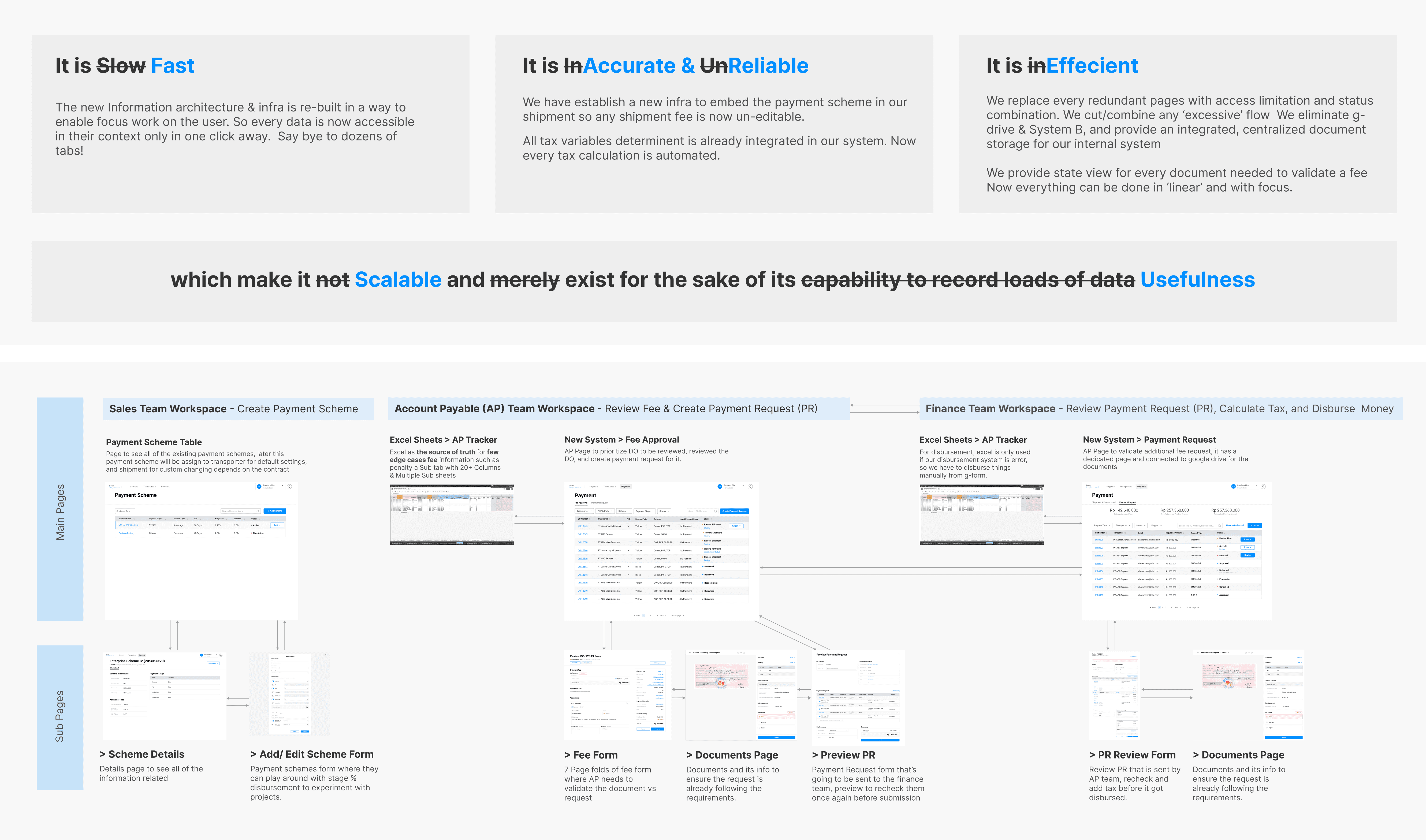
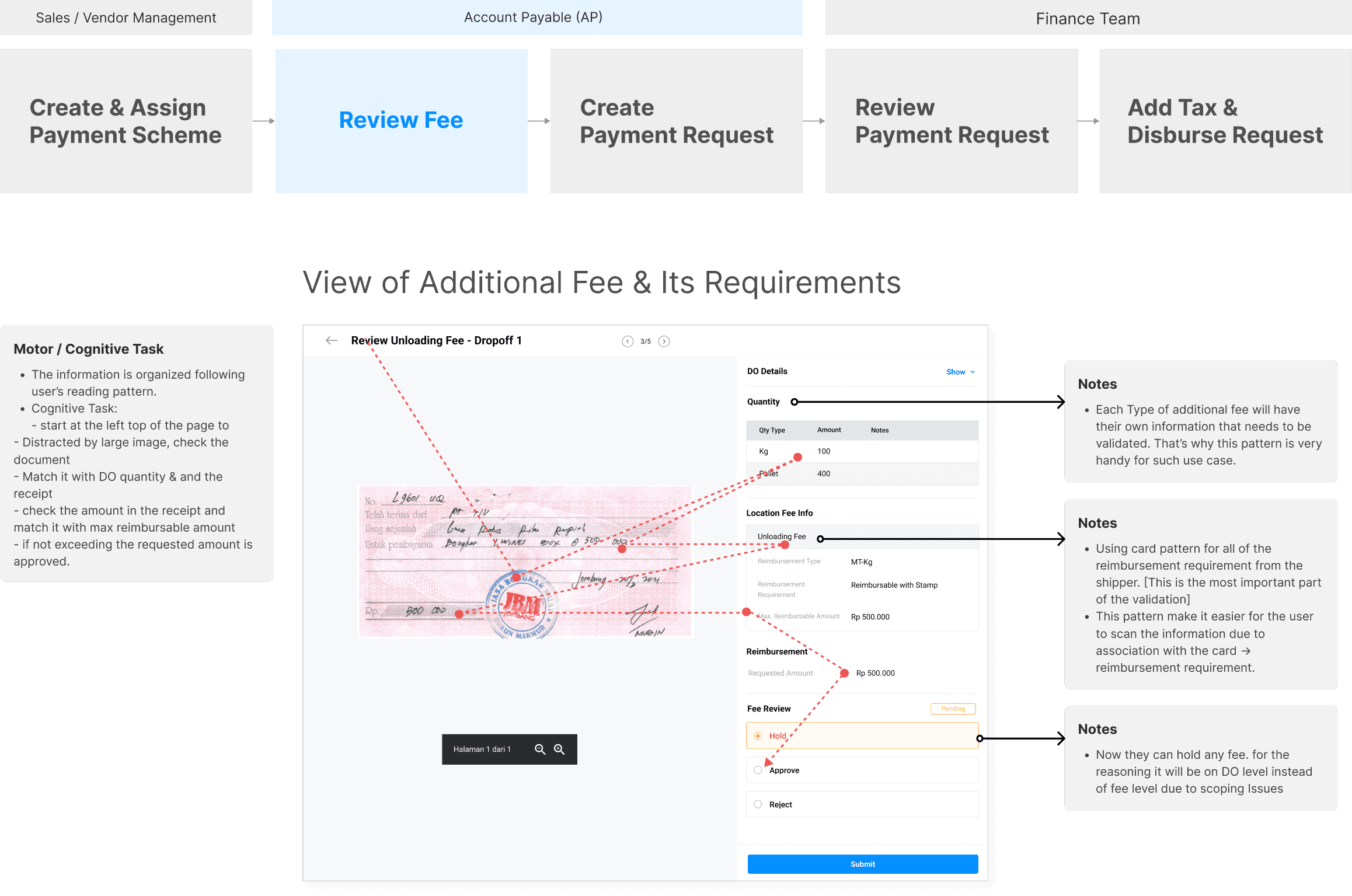
Calculating tax is now a couple of clicks. Truck documents no longer live in a separate Google Drive either — they can be opened straight from the license plate.
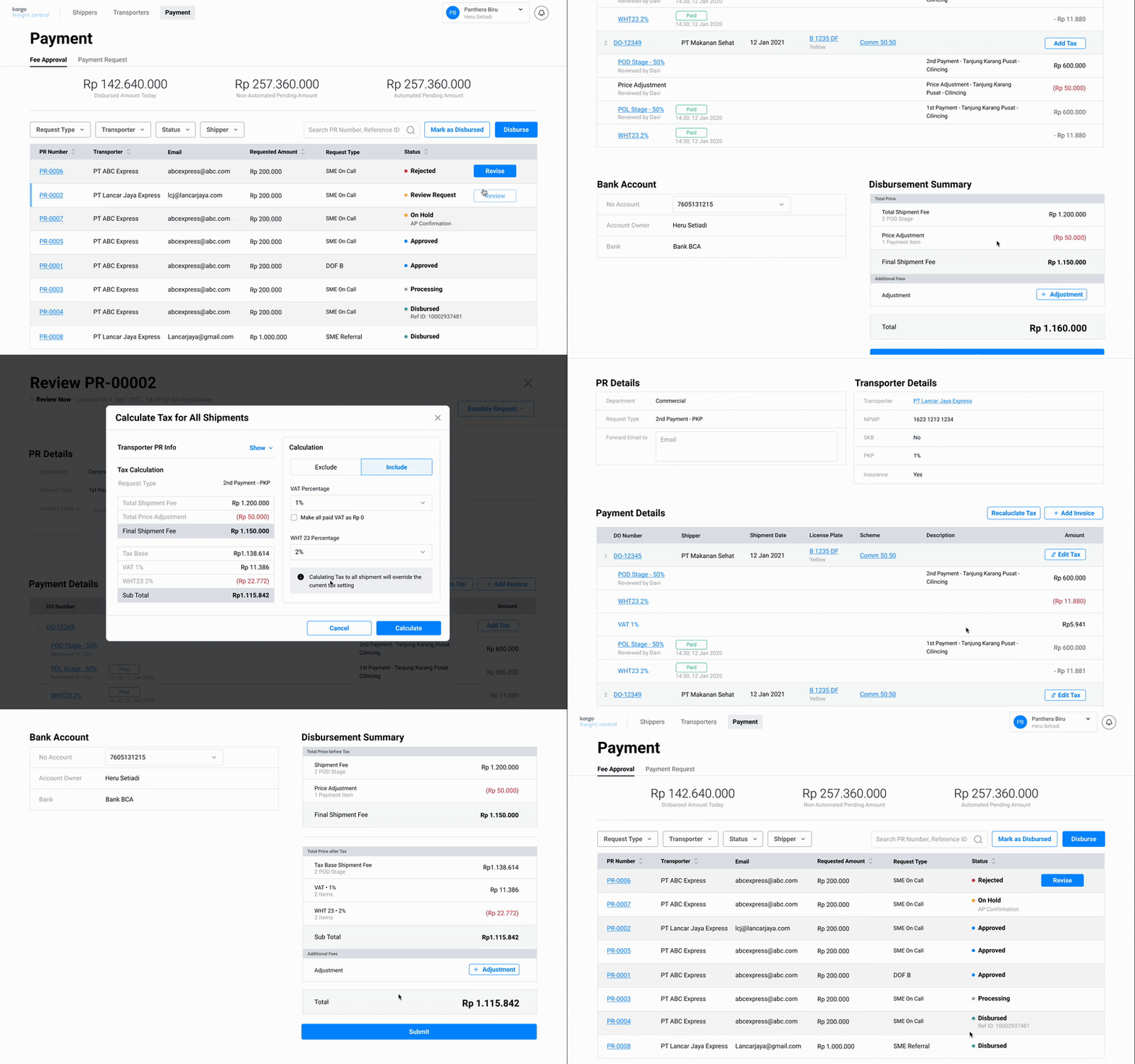
Validating a fee request is smooth now. Reviewers move through documents and their requirements in one place, because every document is centralized and attached to its fee type.
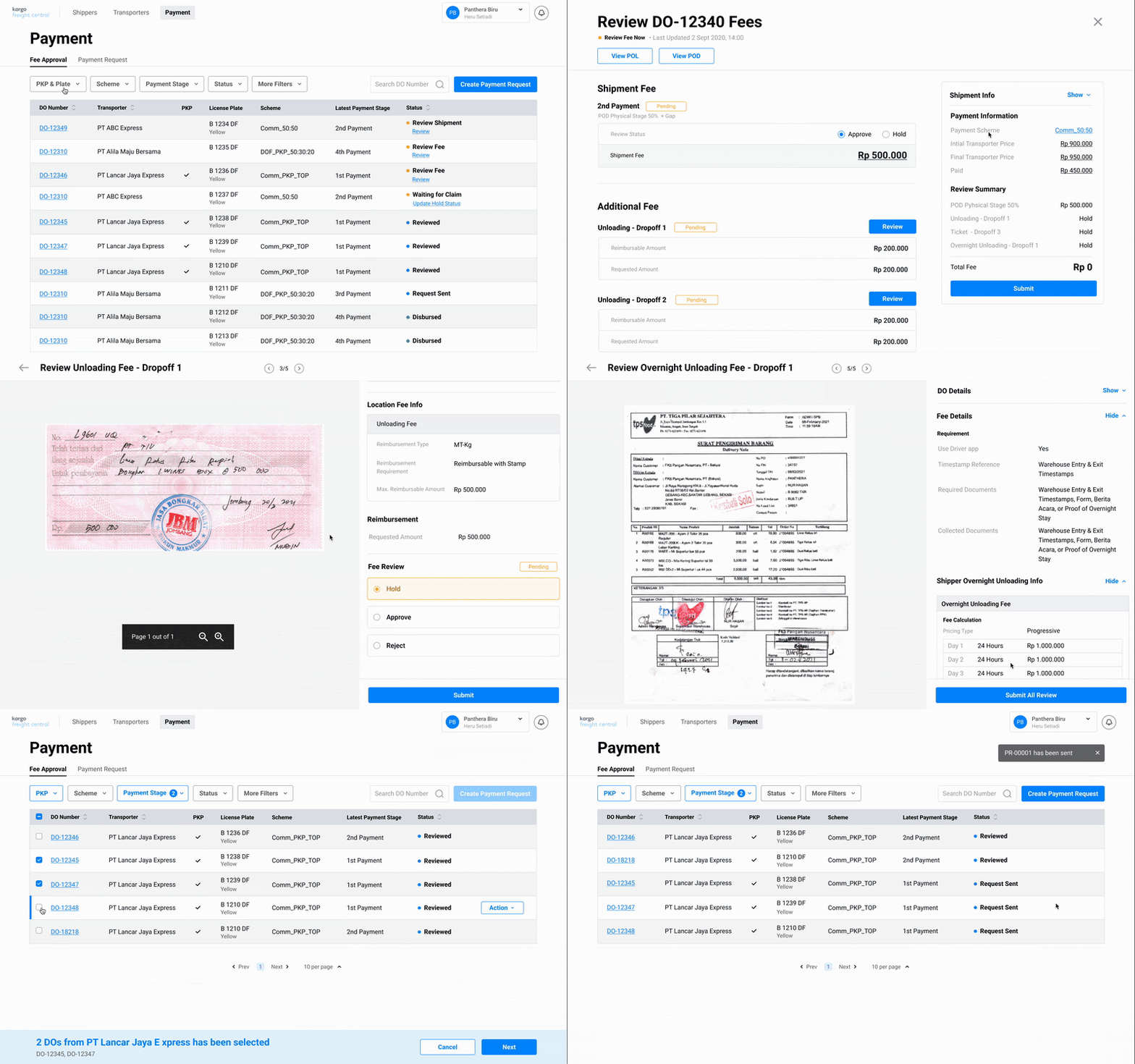
Disbursement amounts can be adjusted at the stages that allow it — and nowhere else. The main shipment fee is generated automatically from the disbursement stage set in the scheme, and it is immutable, so typos stop causing rejected payment requests.
It's a literal embodiment of quick fixes.
That was the most concise description of our payment dashboard at the time. These were the first impressions of the system at a glance:
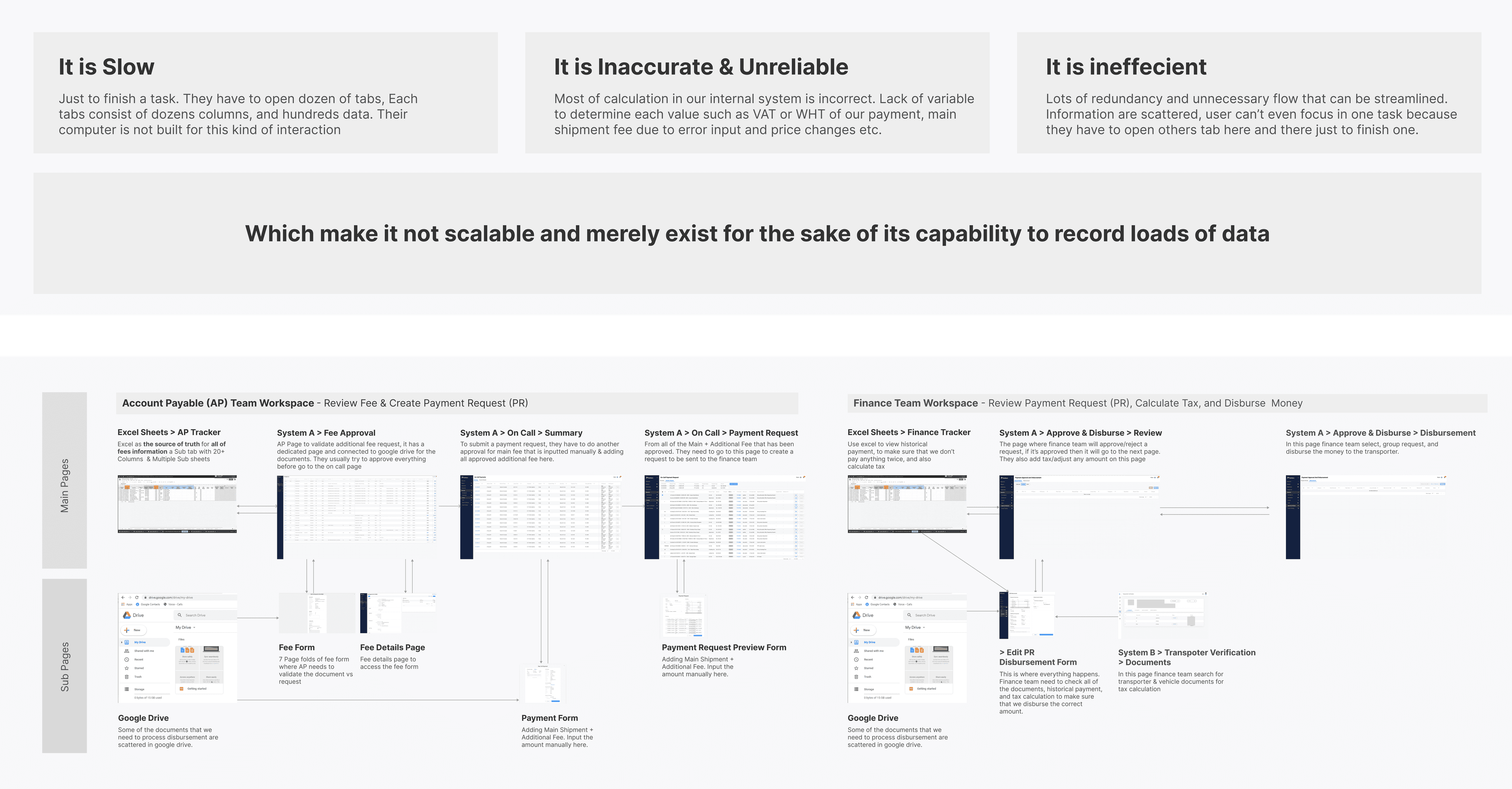
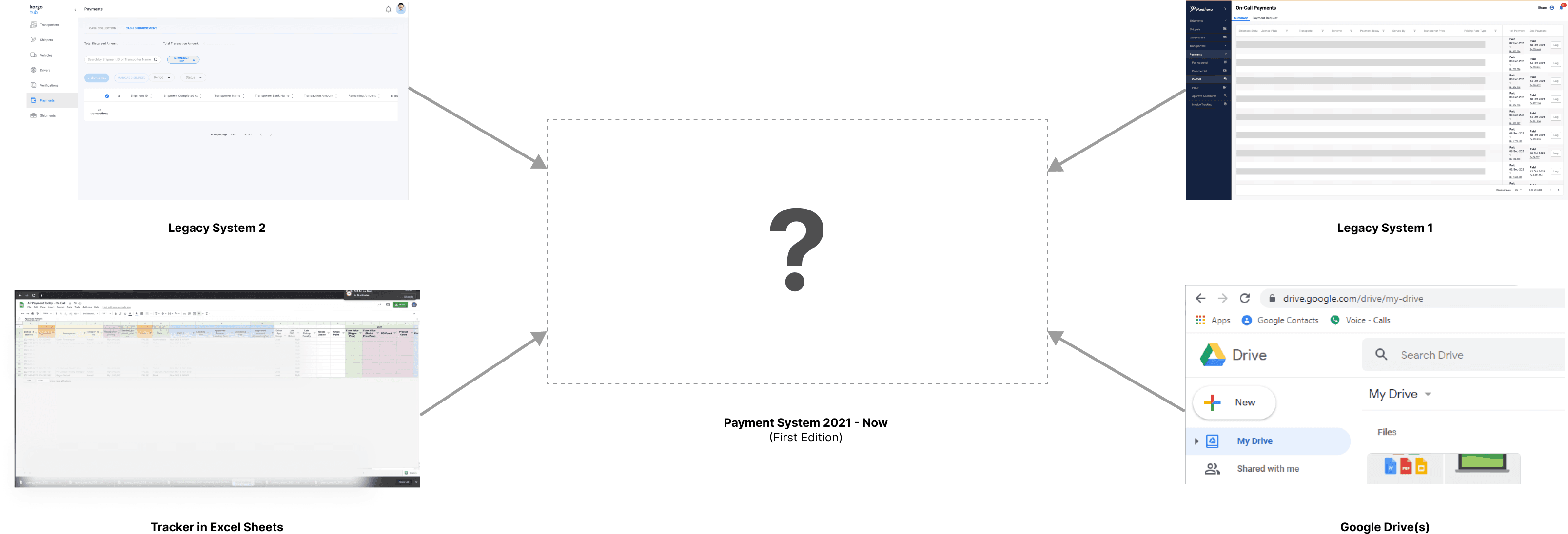
I partly contributed to this mess — I knew the risk of a quick fix and saw the signs, but didn't act on them during my first three months in the payment squad. So the offensive tone is necessary. We learned it the hard way.
Once we had identified the surface problems, I planned the discovery side of the project.
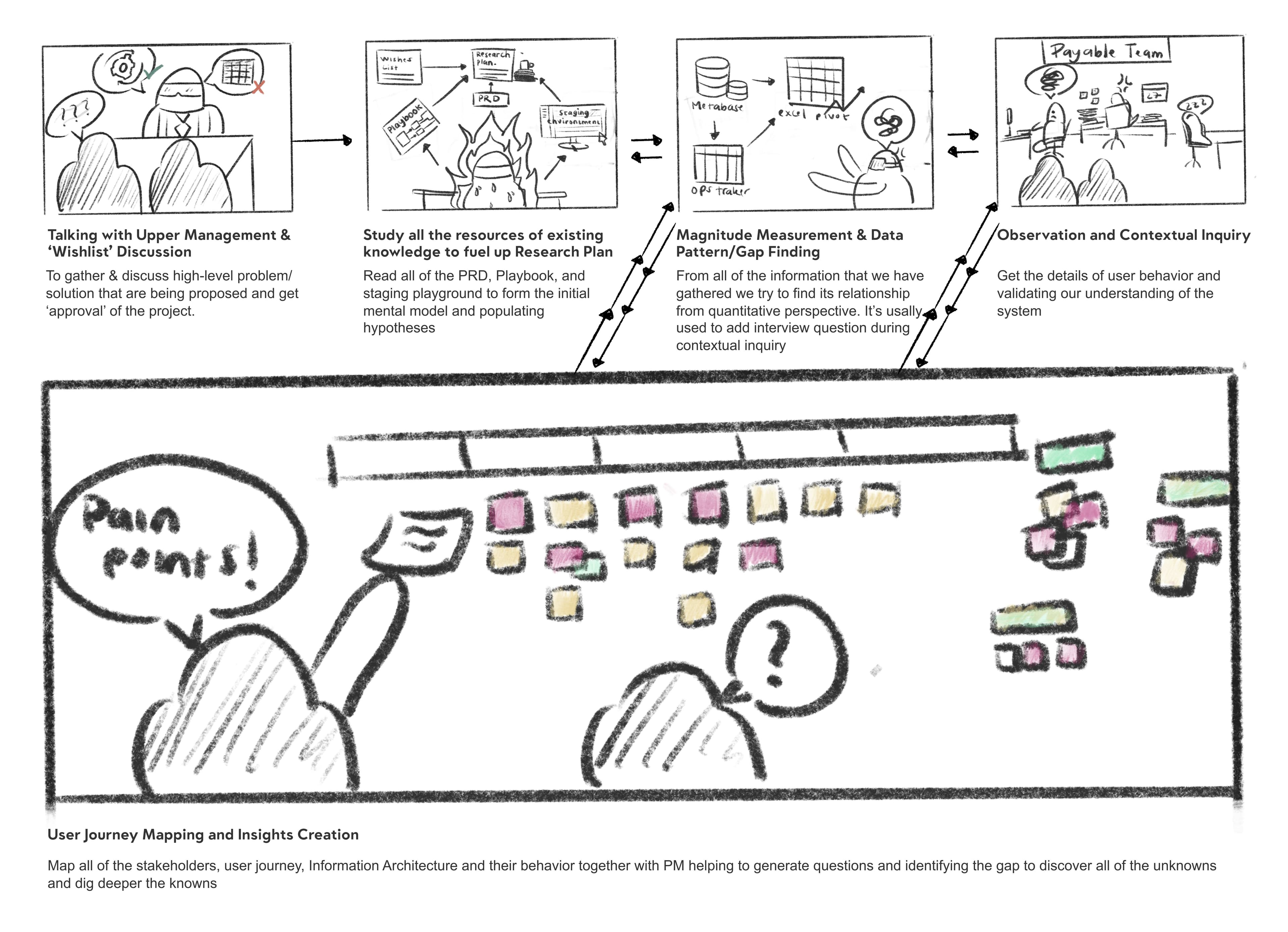
Looking at each problem on its own, every one of them looked straightforward to fix. But we had already learned that another quick fix fixes nothing, so we tied the pieces into a single story and worked out where to intervene:
We also sharpened the project goals so we could work backwards from them.
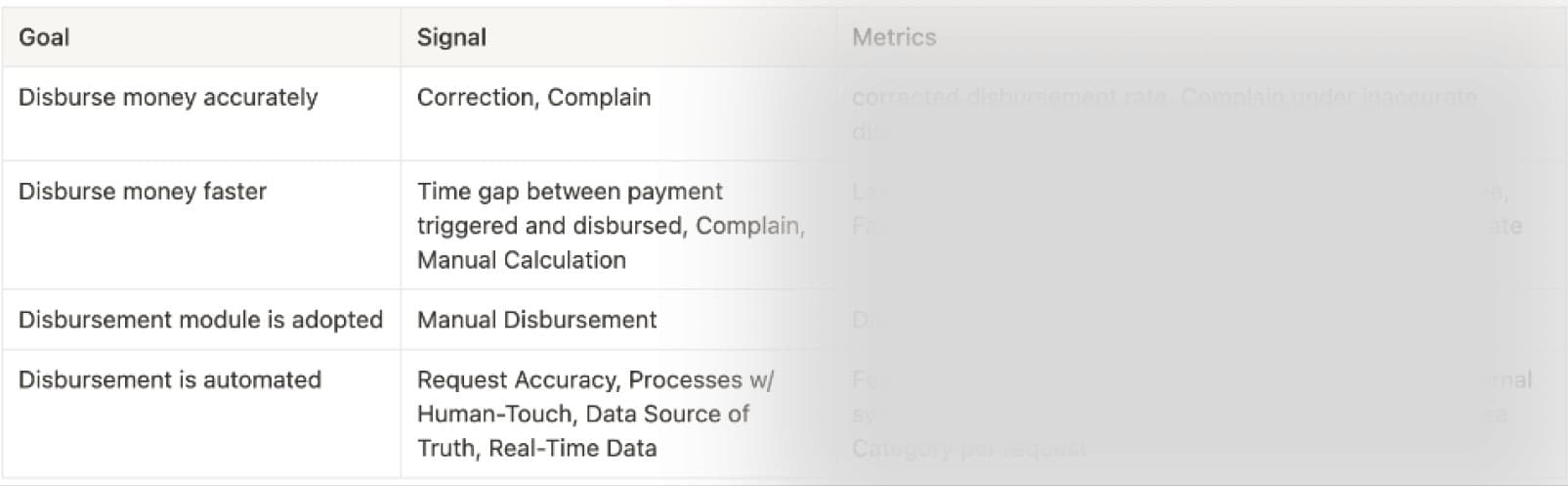
I drafted design principles to keep us pointed at those goals, and the team agreed on them before the delivery kick-off.
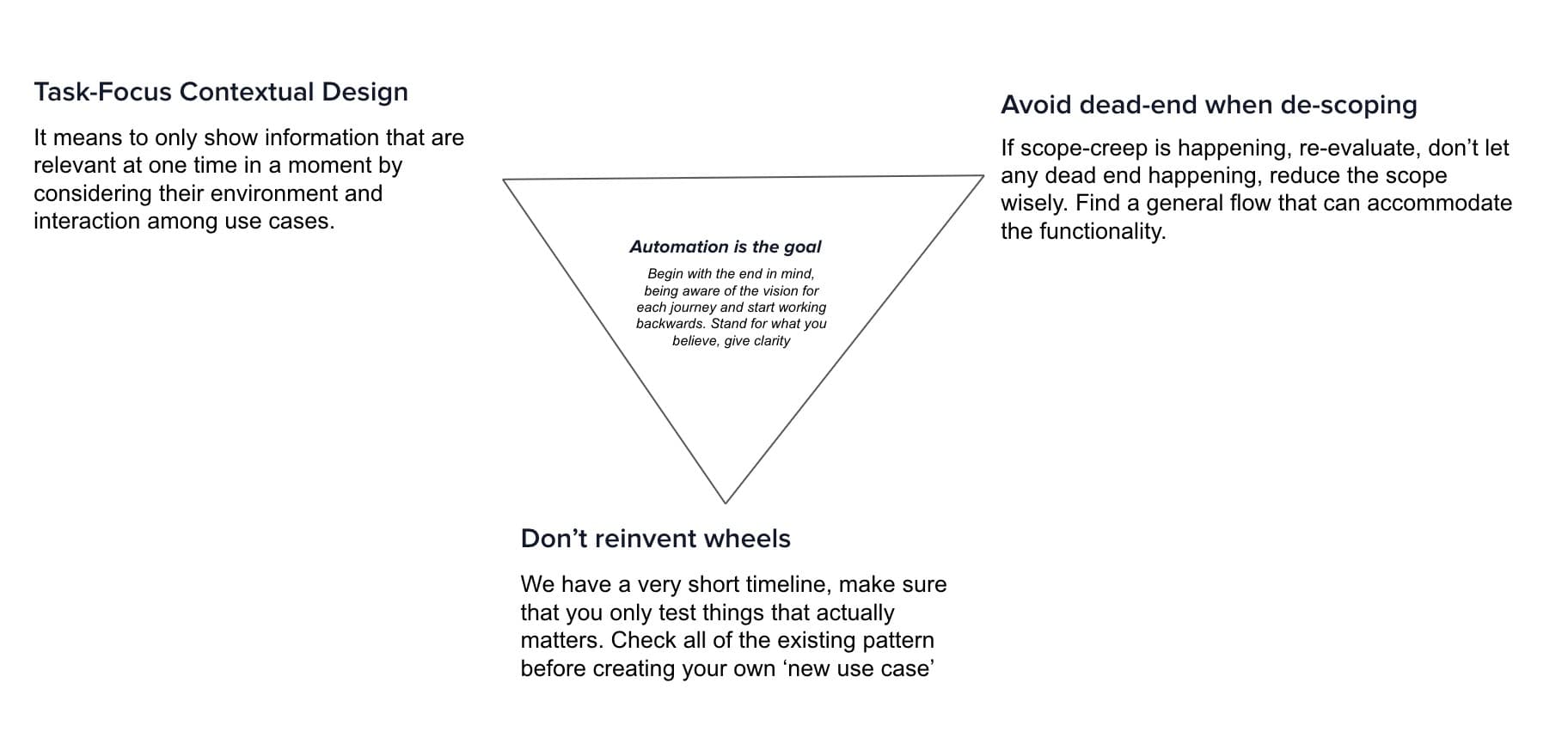
Solution validation leaned on the funnel technique in qualitative usability tests with operational staff, plus design reviews with upper management — breaking down and prioritizing macro and micro jobs-to-be-done for each role.
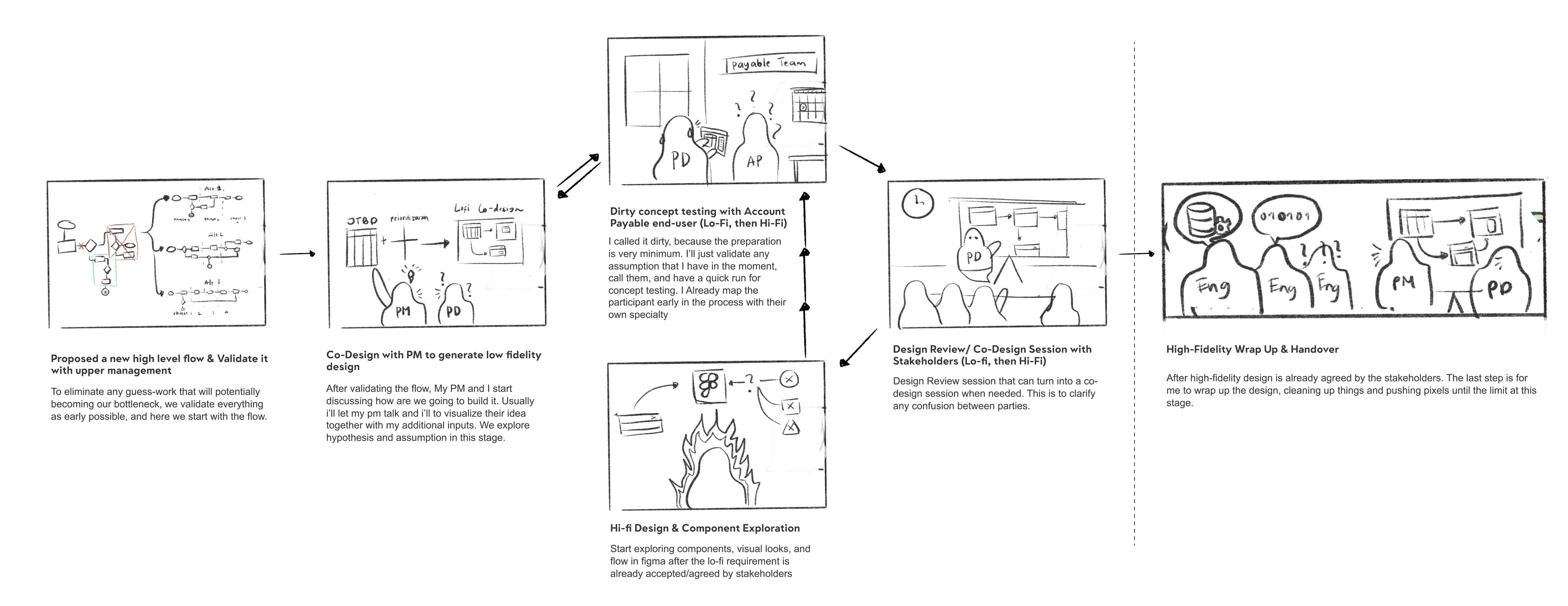
A sample result from the whole process: